
Beneath Barcelona's Barri Gòtic lies Barcino, the Roman town founded in the late 1st century BC. Its walls, towers and temple columns still poke out of houses, courtyards and basements. You just have to know where to look. Here are 10 places in Roman Barcelona, from the walls and the aqueduct to underground streets and houses with frescoes, with addresses, prices and what to look out for.
Prices as of 30 September 2026. Rate: 1 € ≈ $1.13. Where it says "check", the information isn't from an official site.
In short
- One ticket for everything Roman. The MUHBA combined ticket costs 7.30 € (≈$8), is valid for 6 months and covers the underground city beneath Plaça del Rei with the Saló del Tinell, the Via Sepulcral, both Roman houses and El Call. The smaller individual sites are 2.10 € (≈$2.40) each, and under-16s go free.
- Free, no ticket needed: the Roman walls on Plaça de Ramon Berenguer el Gran and Plaça dels Traginers, the towers on Plaça Nova, the aqueduct on Plaça del Vuit de Març and the columns of the Temple of Augustus.
- Weekend mornings only: Domus d'Avinyó and Domus de Sant Honorat (Sat–Sun 10:00–14:00). Plan ahead.
- Closed right now: the Via Sepulcral Romana, under works until 30 November 2026.
Roman Barcino
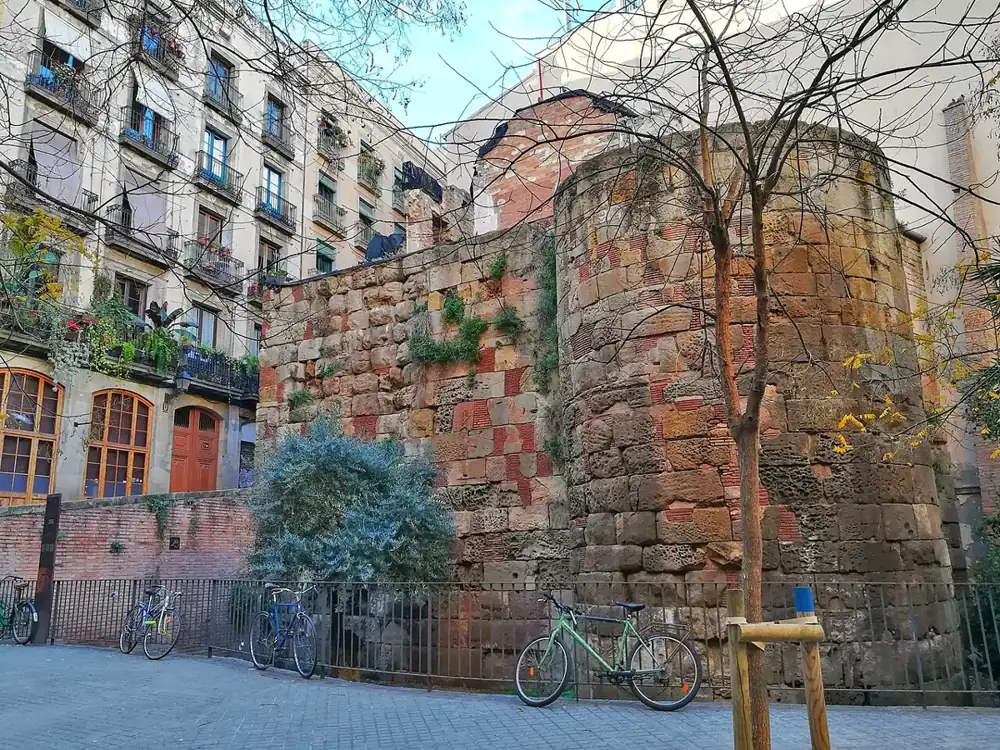
Muralla romana on Plaça de Ramon Berenguer el Gran
Barri Gòtic · Roman wall · 1st century BC, towers 3rd–4th century · free, outdoors
Google Maps · Plaça de Ramon Berenguer el Gran / Via Laietana
The longest stretch of Roman wall you can see anywhere in the city. Barcino's first wall went up in the 1st century BC; in the 3rd and 4th centuries it was strengthened and given 76 towers. The medieval Santa Àgata chapel and the Palau Reial sit right on top of the Roman masonry, so the city quite literally grew out of its wall. The best view is from Via Laietana.
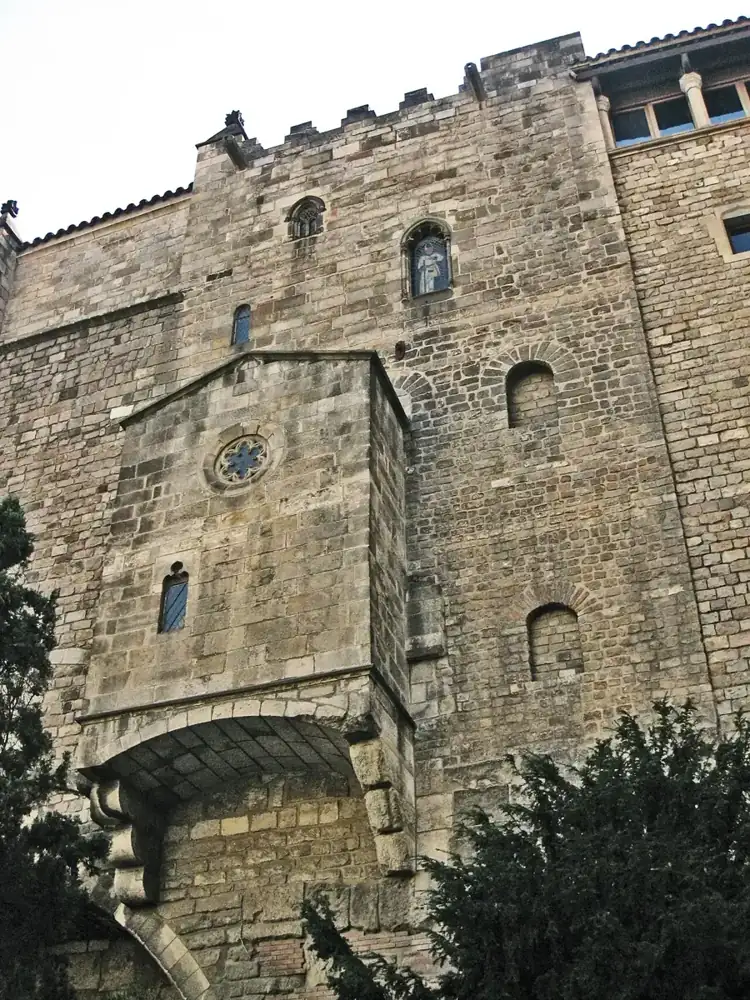
The Roman tower on Plaça dels Traginers
Barri Gòtic · corner tower of the wall · late Roman · free, outdoors
Google Maps · Plaça dels Traginers
A corner tower of the late Roman wall, on a quiet little square that tourists rarely find. Look closely at the lower courses: the huge blocks were taken from older Roman buildings. The Romans happily recycled stone from their own earlier structures.
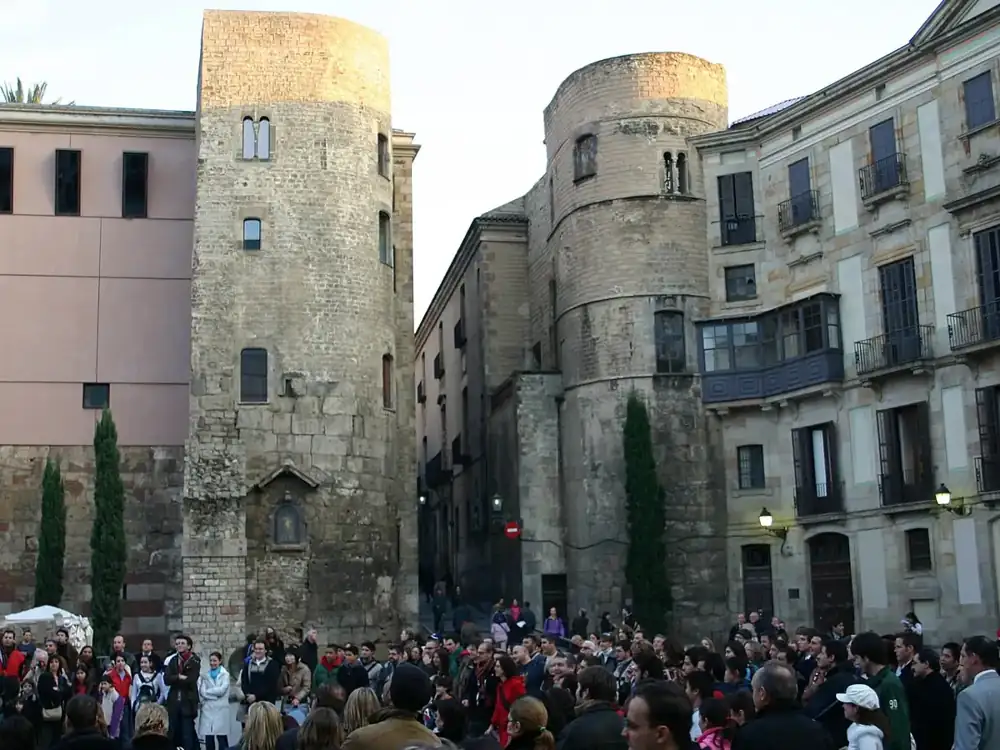
The Portal del Bisbe towers on Plaça Nova
Barri Gòtic · north gate of Barcino · Roman, raised in the 12th century · free
Google Maps · Plaça Nova
These two round towers flanked the north gate of the Roman town, where its main street, the cardo, began. They were built higher in the 12th century. One caveat: the aqueduct arches next to them are a 1958 reconstruction. For the real remains of the aqueduct, see the next entry.
The Roman aqueduct on Plaça del Vuit de Març
Barri Gòtic · aqueduct · 1st century AD · free, outdoors
Google Maps · Plaça del Vuit de Març (by Carrer de Duran i Bas)
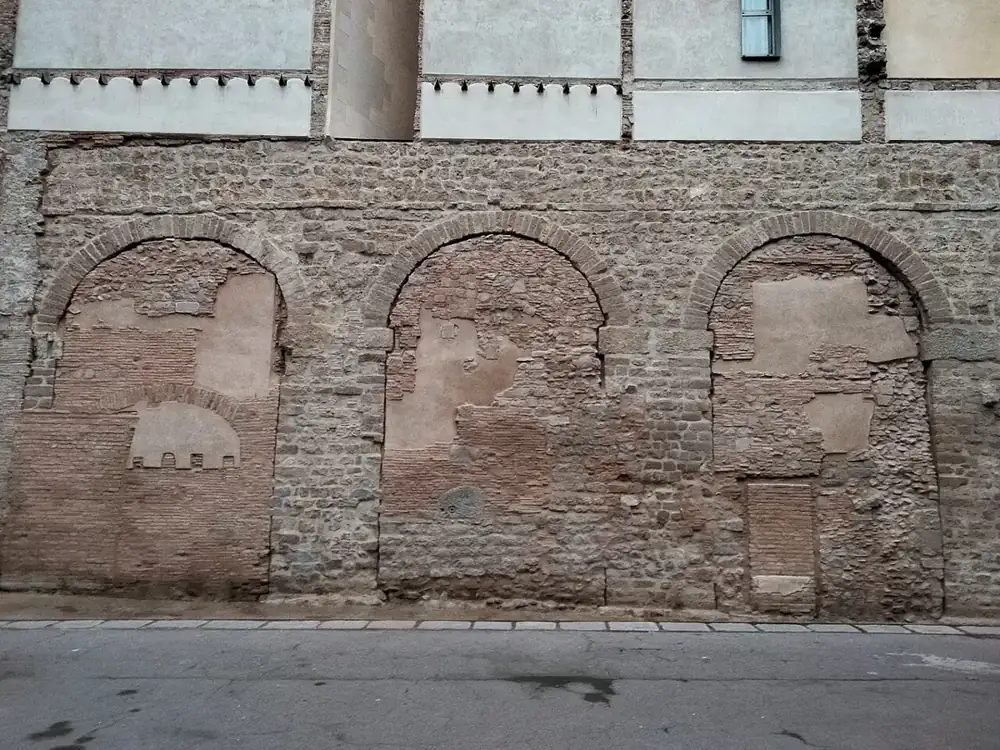
The only genuine surviving section of the aqueduct that brought water into the city from the river Besòs. Four arches turned up in 1988 when a house was demolished; all that time they had been hidden inside the wall of the building next door. They're easy to miss: just brick arches in a blank party wall on a tiny square.
Temple d'August
Barri Gòtic · Temple of Augustus · late 1st century BC – 1st century AD · free · Mon 10:00–14:00, Tue–Sat 10:00–19:00, Sun 10:00–20:00
Google Maps · website · Carrer del Paradís, 10
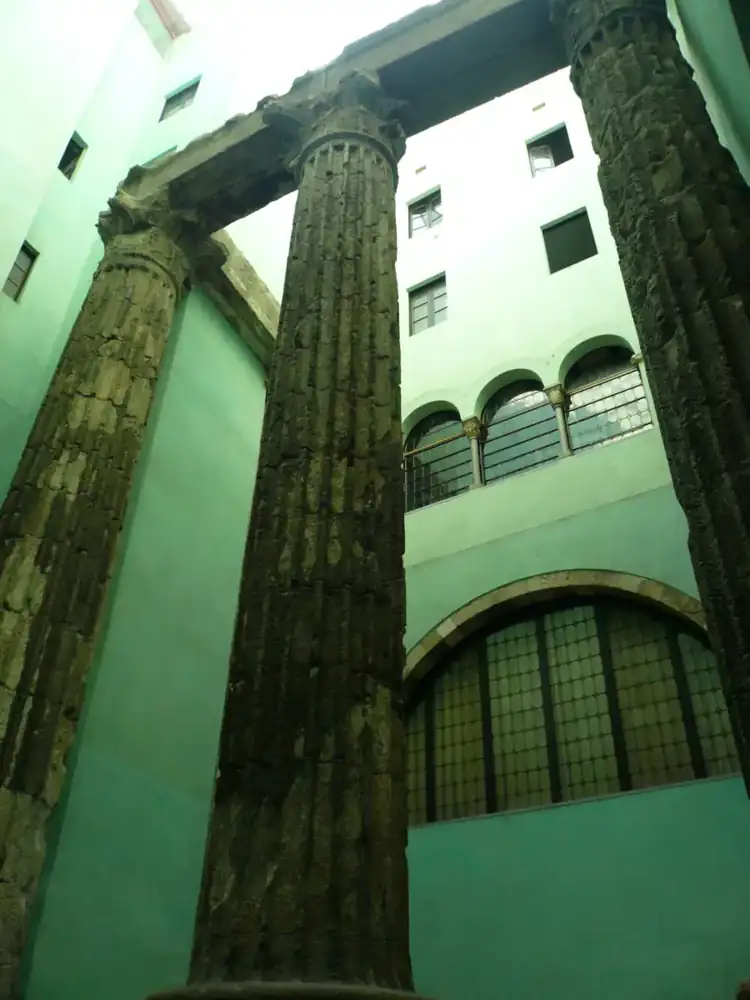
Four fluted Corinthian columns, with part of the podium and architrave, from the temple that stood on the forum on Mont Tàber, the highest point of the Roman town. The strangest thing is where they are now: in the inner courtyard of the Centre Excursionista de Catalunya, a hiking club. You can't see them from the street, so you have to go inside.
MUHBA Plaça del Rei: the underground city
Barri Gòtic · Roman and Visigothic city beneath the square · 1st–7th century · 7.30 € (≈$8) (MUHBA combined ticket) · Tue–Sat 10:00–19:00, Sun 10:00–20:00
Google Maps · website · Plaça del Rei, entrance on Carrer del Veguer
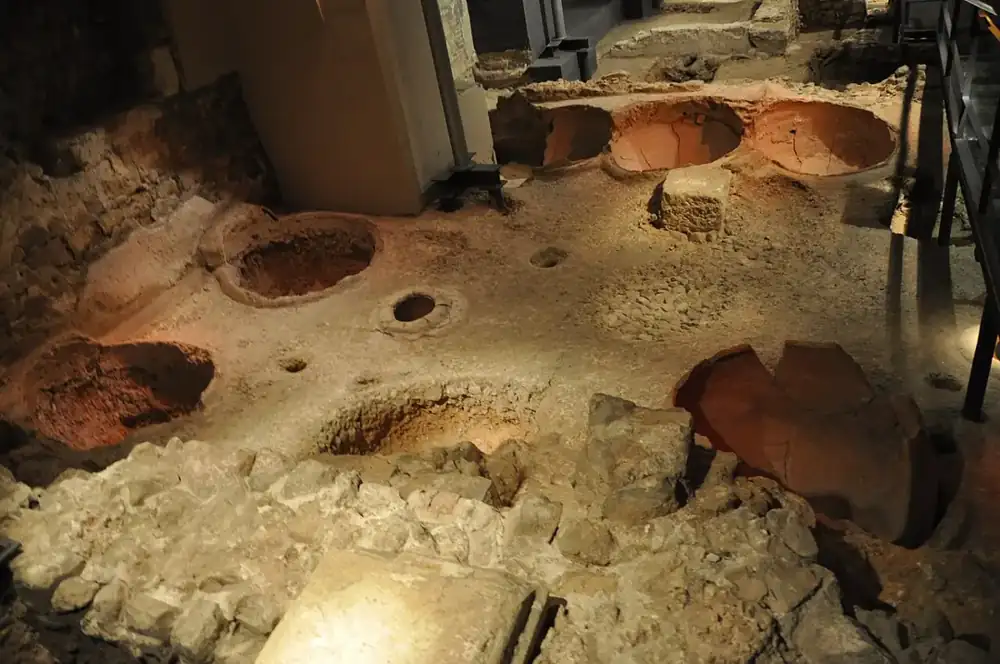
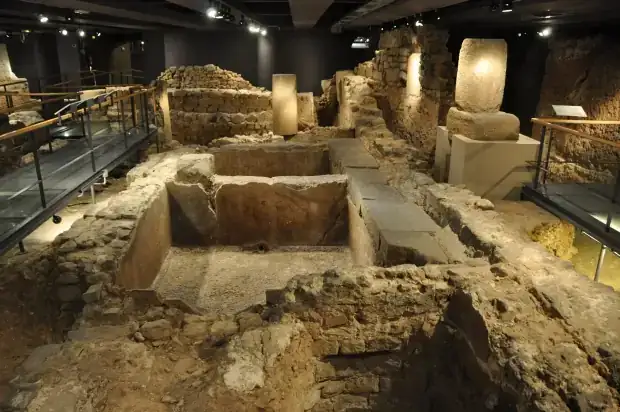
The number one site for Roman Barcelona: you go down beneath the square and walk along the real streets of Barcino. On the way you pass a 2nd-century laundry (a fullonica), a dye works, a workshop where they made garum fish sauce, and a 3rd-century winery with its wine vats. Further on is the bishop's complex from the 4th–7th centuries, with a baptistery and a cross-shaped church. The same ticket gets you into the Palau Reial upstairs.
Via Sepulcral Romana
Barri Gòtic · Roman road lined with tombs · 1st–3rd century · 2.10 € (≈$2.40) · ⚠️ closed for works from 22 September to 30 November 2026
Google Maps · website · Plaça de la Vila de Madrid
The Romans buried their dead outside the city walls, along the roads. A stretch of one of those roads survives here, with tombs from the 1st to the 3rd century. You can see it from above, from the sunken square, and the centre next to it displays finds from the burials. It's closed for works until the end of November 2026, so check before you go.
Domus d'Avinyó
Barri Gòtic · Roman house · 1st century AD · 2.10 € (≈$2.40) · Sat–Sun 10:00–14:00 only
Google Maps · website · Carrer d'Avinyó, 15
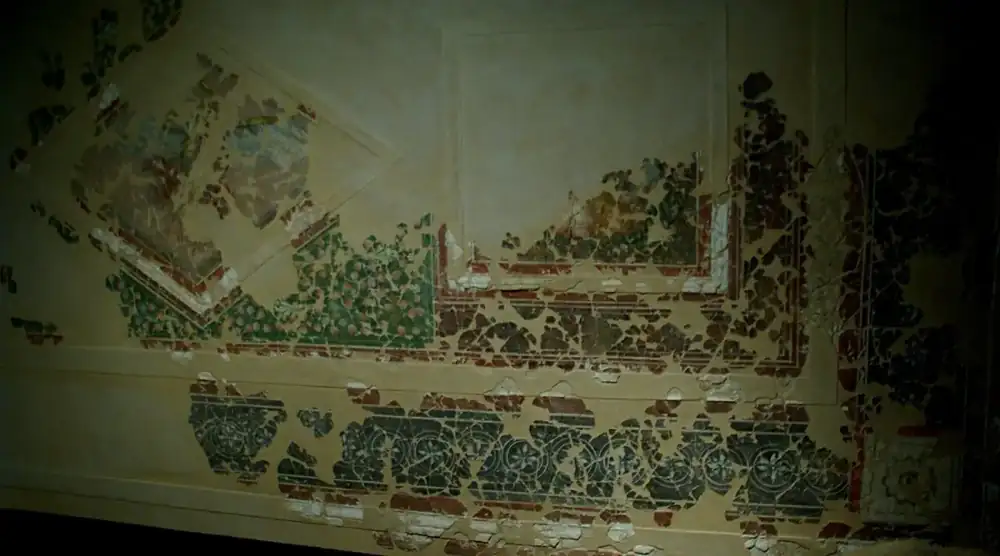
A 1st-century Roman town house with restored paintings on its walls and ceilings. The best known is a fresco of the abduction of Ganymede. It only opens on weekend mornings, so plan ahead.
Domus de Sant Honorat
Barri Gòtic · Roman aristocratic house · 4th century · 2.10 € (≈$2.40) · Sat–Sun 10:00–14:00 only
Google Maps · website · Carrer de la Fruita, 2
A wealthy 4th-century house with a garden and colourful geometric mosaics: Barcino's late Roman elite lived rather well. Like the Domus d'Avinyó, it only opens on weekend mornings, so the two fit neatly into one walk.
Porta de Mar and the Roman baths at Pati Llimona
Barri Gòtic · sea gate and harbour baths · 1st–2nd century · free · Sat 10:00–14:00, closed in August
Google Maps · website · Carrer del Regomir, 7–9
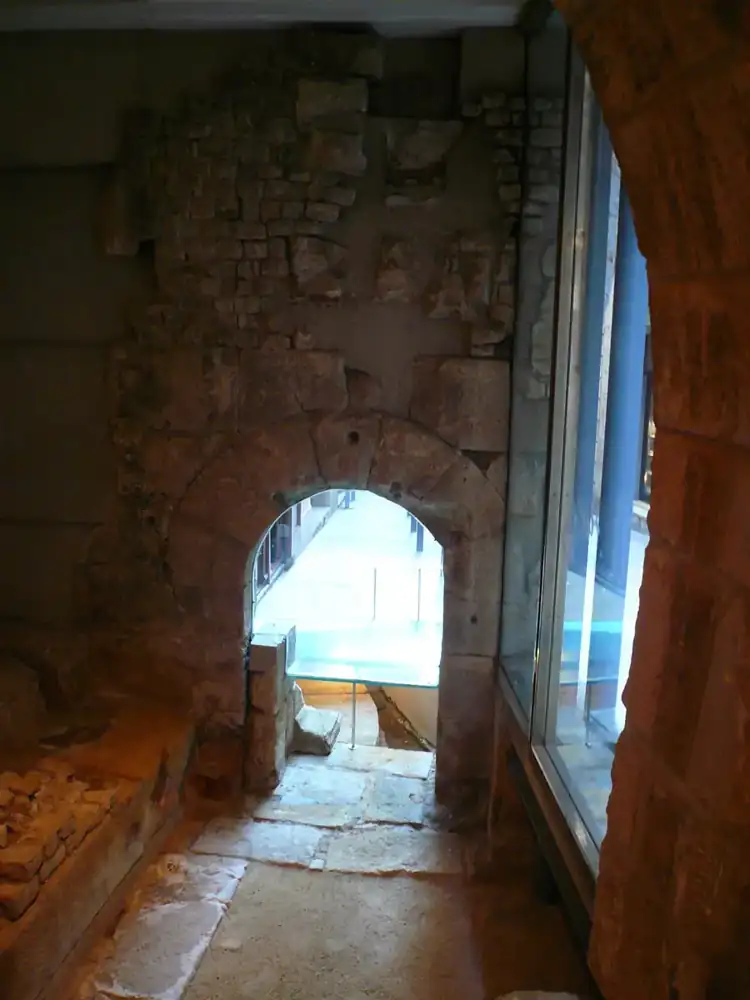
Porta de Mar (the Sea Gate) was the most important gate in town, facing the water. What survives is its side gate for pedestrians, a piece of wall and the harbour baths from the 1st–2nd century. It's all inside the Pati Llimona civic centre.
One last thing
Everything Roman is within a 15-minute walk of everything else, so it makes one stroll. Start at the towers on Plaça Nova, drop in on the Temple of Augustus columns on Carrer del Paradís, go down beneath Plaça del Rei, come out by the wall on Plaça de Ramon Berenguer el Gran and finish at the tower on Plaça dels Traginers. If you're going at the weekend, start the morning with the two Roman houses: they're only open until 14:00.
More on Barcelona: Romanesque, Gothic.