
In the 14th and 15th centuries Barcelona was a rich seafaring city of the Crown of Aragon, and that age left it a cathedral and basilicas, a royal palace, shipyards, an exchange and merchants' palaces. Here are 12 places in Gothic Barcelona with addresses, prices and what to look out for, including where the Gothic hides behind later façades.
Prices as of 30 September 2026. Rate: 1 € ≈ $1.13. Where it says "check", the information isn't from an official site.
In short
- Free: Santa Maria del Mar outside cultural-visit hours, the courtyard of the Antic Hospital de la Santa Creu, the wall by the Santa Madrona gate and Carrer de Montcada.
- On the same ticket as the Roman underground: the Saló del Tinell and the Capella de Santa Àgata are included in the MUHBA Plaça del Rei ticket, 7.30 € (≈$8); MUHBA El Call is 2.10 € (≈$2.40).
- Gothic behind later façades: the cathedral's façade and spire are 19th–20th century, the city hall's Gothic front hides round the side on Carrer de la Ciutat, and the Llotja de Mar hall sits inside an 18th-century building.
- By appointment only: the Palau de la Generalitat and its courtyard of orange trees.
- A half-day of its own: the Monestir de Pedralbes, far from the centre, free on Sundays from 15:00 (check).
Gothic
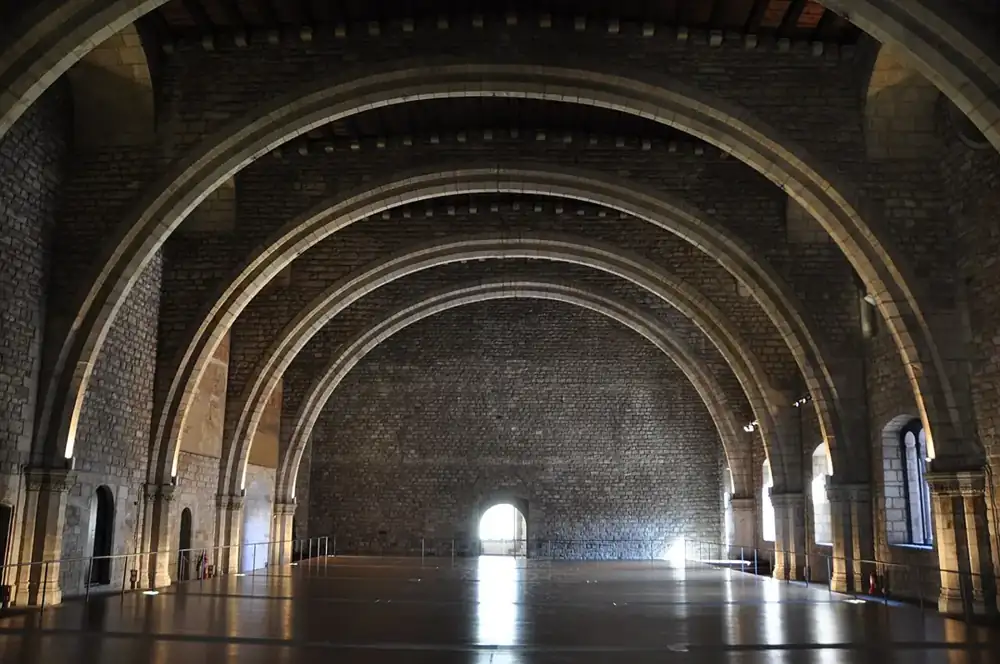
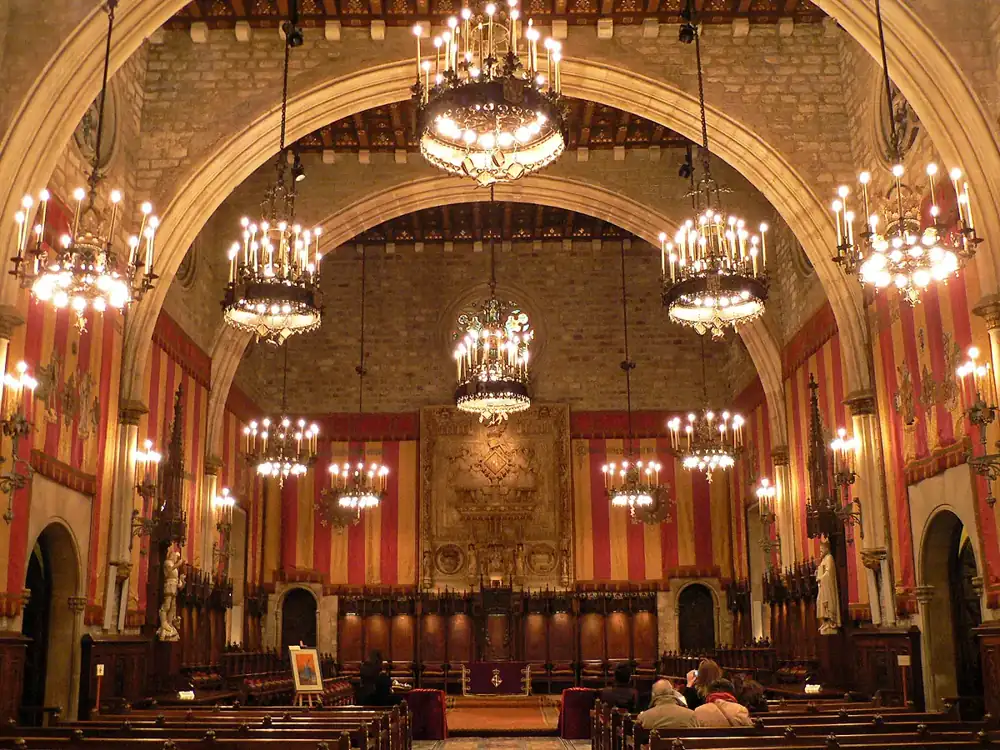
Palau Reial Major: Saló del Tinell and Capella de Santa Àgata
Barri Gòtic · royal palace · chapel 1302, hall 1359–1362 · included in the MUHBA Plaça del Rei ticket (7.30 € (≈$8))
Google Maps · website · Plaça del Rei
The palace of the Counts of Barcelona and the Kings of Aragon. The Saló del Tinell is a vast hall spanned by giant diaphragm arches from the mid-14th century, and the palace chapel of Santa Àgata stands right on the Roman wall. See it in the same visit as the underground city beneath the square.
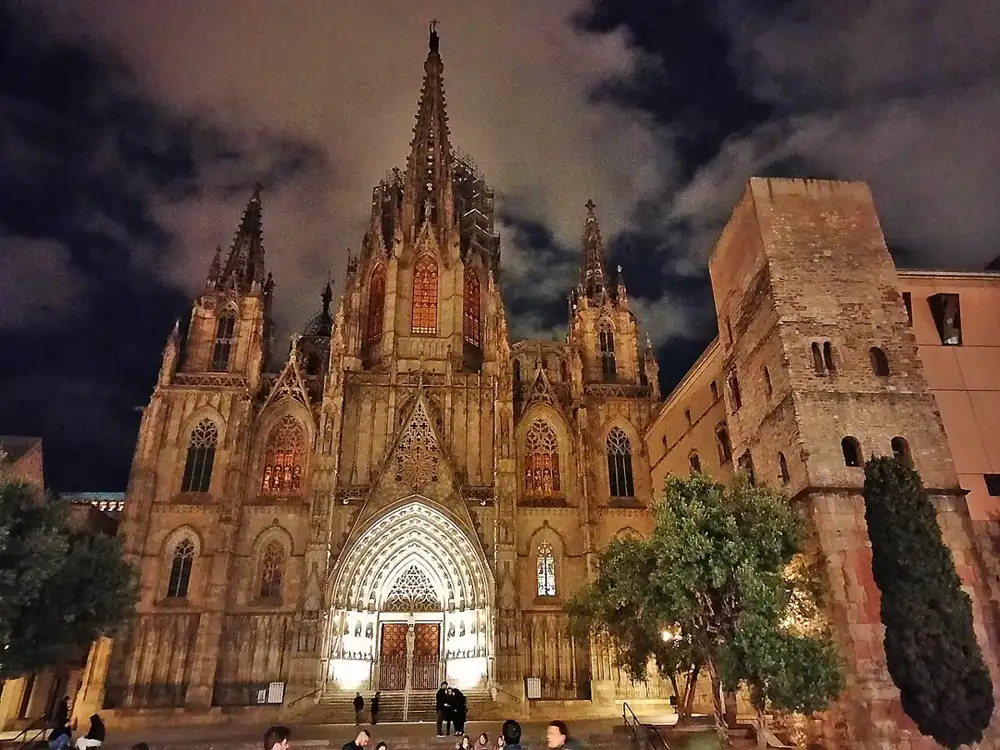
Catedral de Barcelona
Barri Gòtic · cathedral · 13th–15th century (facade and spire 19th–20th century) · paid entry during tourist hours (check)
Google Maps · website · Pla de la Seu
The 13th–15th-century Gothic cathedral stands on the site of earlier Romanesque and early Christian churches. The famous facade and spire, by the way, were only added in the 19th and 20th centuries. Don't miss the cloister with its geese and the fountain of Saint George.
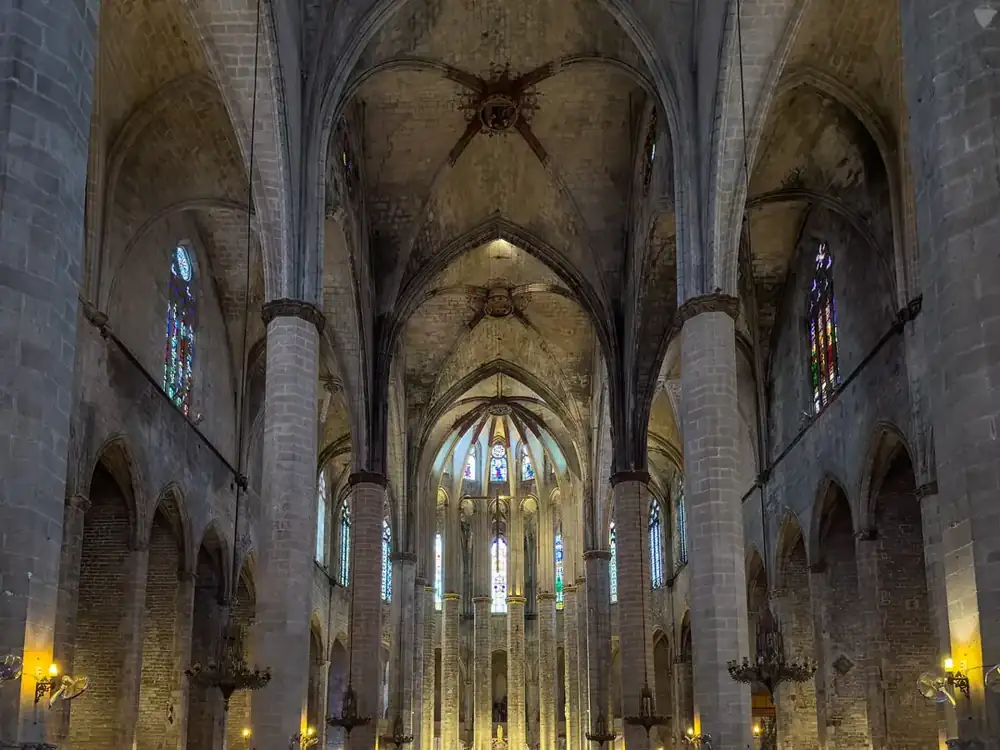
Santa Maria del Mar
La Ribera · basilica · 1329–1383 · free outside cultural visit hours; cultural visit (gallery, crypt, towers, roofs) 8 € (≈$9), Mon–Sat 10:00–18:00, Sun 13:00–18:00
Google Maps · website · Plaça de Santa Maria, 1
Catalan Gothic at its purest: a huge, light-filled space on slender octagonal columns, built in just half a century. You can go in for free outside cultural visit hours, and 8 € gets you up to the galleries, down into the crypt and out onto the roof.
Santa Maria del Pi
Barri Gòtic · basilica · mentioned from 987, Gothic building 14th century · paid visit and tower (check)
Google Maps · Plaça del Pi, 7
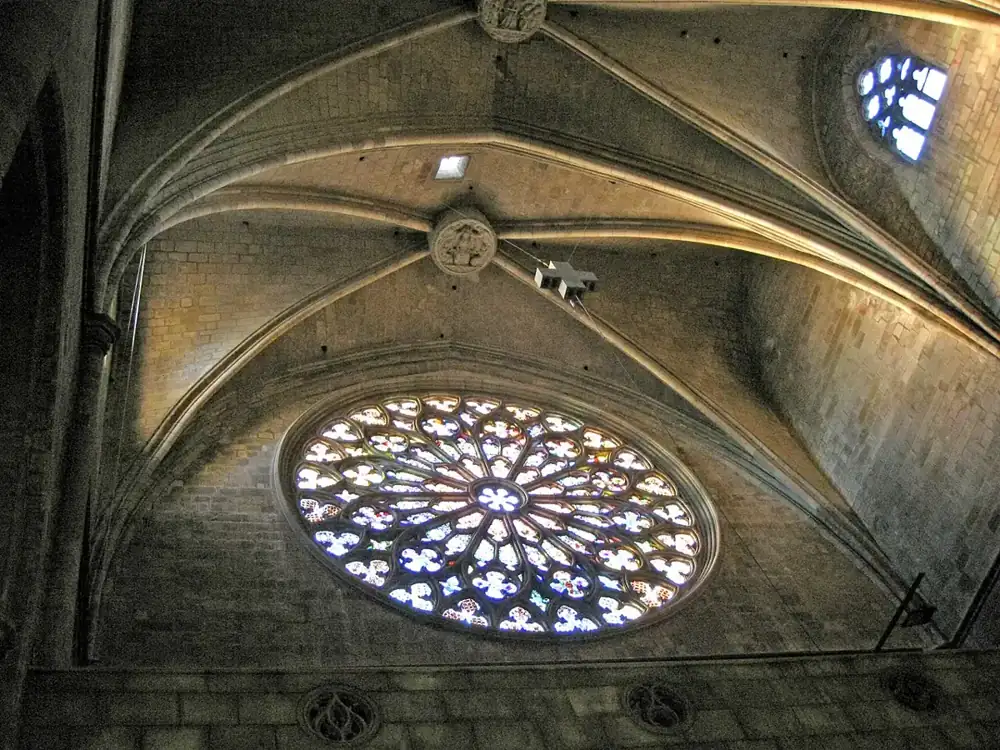
A church here is mentioned as early as 987; the Gothic building you see today is from the 14th century. The star is the gigantic rose window. On the side portal, look for the remains of a Romanesque capital from the older church.
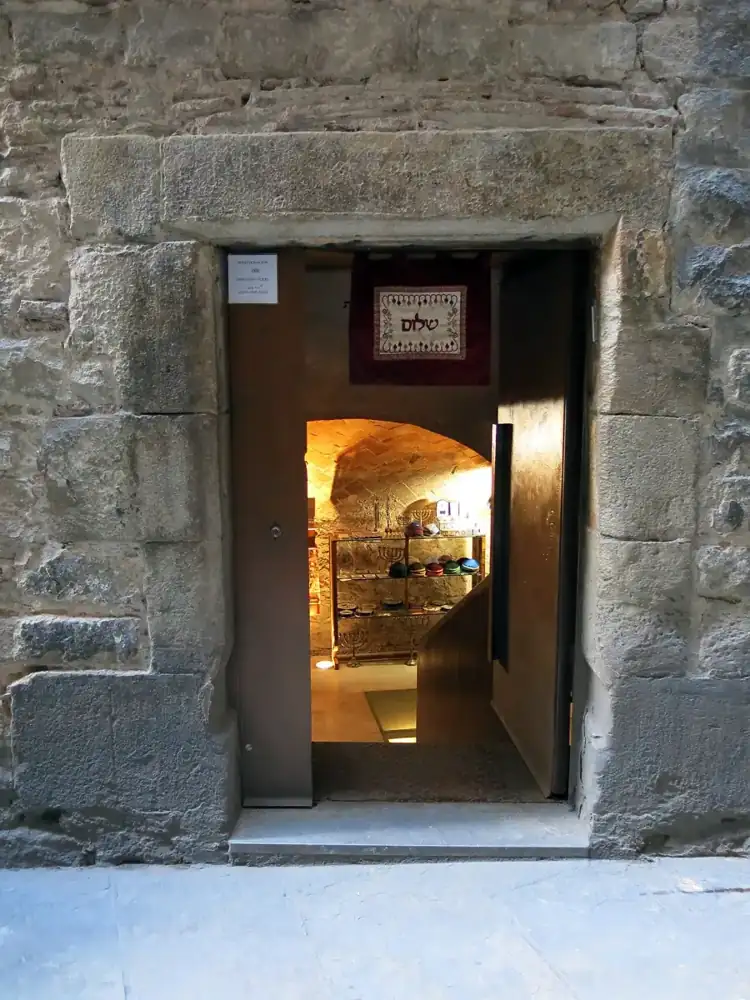
El Call and the Sinagoga Major
Barri Gòtic · Jewish quarter · 13th–14th century · MUHBA El Call 2.10 € (≈$2.40); Sinagoga Major about 3.50 € (≈$4) (check)
Google Maps · website · MUHBA El Call: Placeta de Manuel Ribé; Sinagoga Major: Carrer de Marlet, 5
The medieval Jewish quarter, whose life was cut short by the pogrom of 1391. MUHBA El Call is in the 13th–14th-century house of the weaver Jucef Bonhiac. The Sinagoga Major on Carrer de Marlet is a vaulted medieval room shown by a local association. To be honest, it's disputed whether this really was the quarter's main synagogue: the Catalan Wikipedia places it at Carrer de Salomó ben Adret, 9.
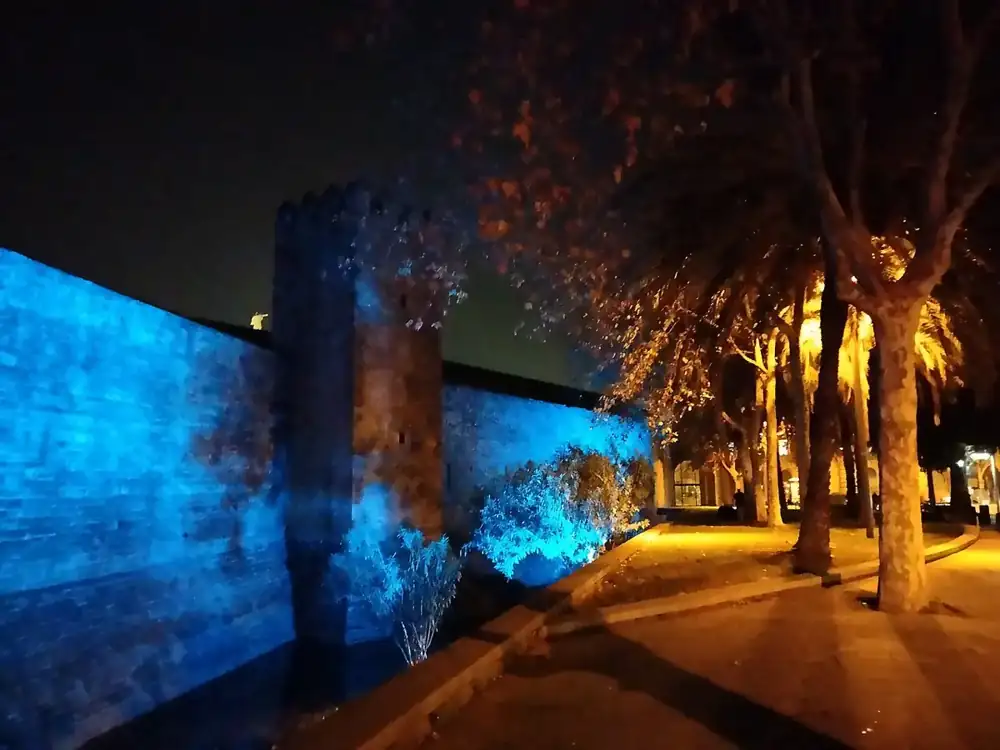
Drassanes Reials and the Muralla de Santa Madrona
El Raval · royal shipyards and city wall · shipyards from the late 13th century (largely rebuilt in the 16th), wall 14th century · museum paid (check), wall free
Google Maps · Avinguda de les Drassanes / Avinguda del Paral·lel
The medieval shipyards where galleys were built, now home to the Maritime Museum. Next to them, on the Paral·lel side, stands the only surviving stretch of the 14th-century wall, with the Santa Madrona gate.
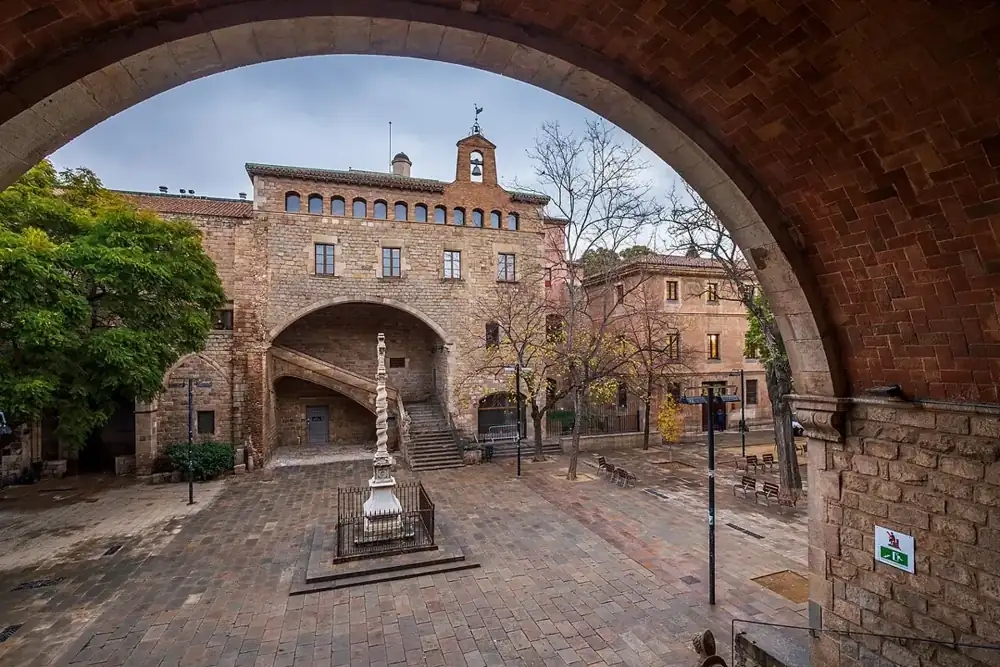
Antic Hospital de la Santa Creu
El Raval · medieval hospital · founded 1401 · courtyard free
Google Maps · Carrer de l'Hospital, 56
A hospital founded in 1401, with a Gothic garden courtyard and enormous vaulted wards that now house the Biblioteca de Catalunya. This is where Gaudí was brought in 1926 after being hit by a tram, mistaken for a pauper, and where he died.
Casa de la Ciutat and the Saló de Cent
Barri Gòtic · city hall · courtyard 1391, facade 1399 · open days vary (check)
Google Maps · Plaça de Sant Jaume, 1 (Gothic facade on Carrer de la Ciutat)
Barcelona's city hall. From Plaça de Sant Jaume you see a neoclassical front; the real Gothic facade, by Arnau Bargués in 1399, is tucked round the side on Carrer de la Ciutat. Inside is the Saló de Cent, the chamber of the medieval city council.
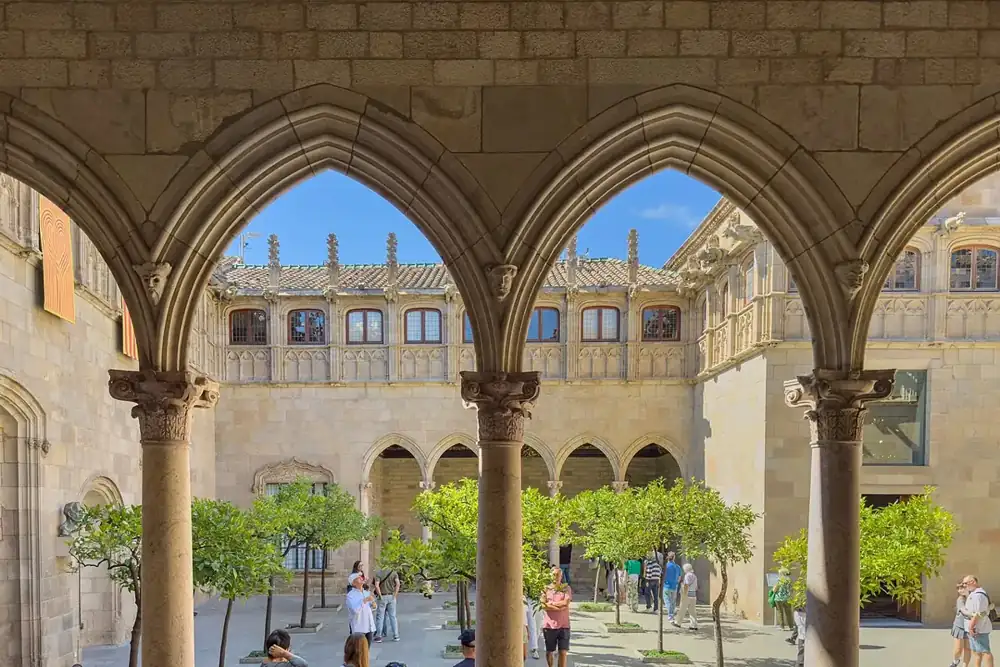
Palau de la Generalitat
Barri Gòtic · seat of the Catalan government · 15th-century Gothic facade · visits by appointment only (check)
Google Maps · Plaça de Sant Jaume / Carrer del Bisbe
Facing the city hall is the palace of the Catalan government. Its 15th-century Gothic facade with a medallion of Saint George looks onto Carrer del Bisbe, and inside is the famous Pati dels Tarongers, a courtyard of orange trees. You can only get in with an advance booking.
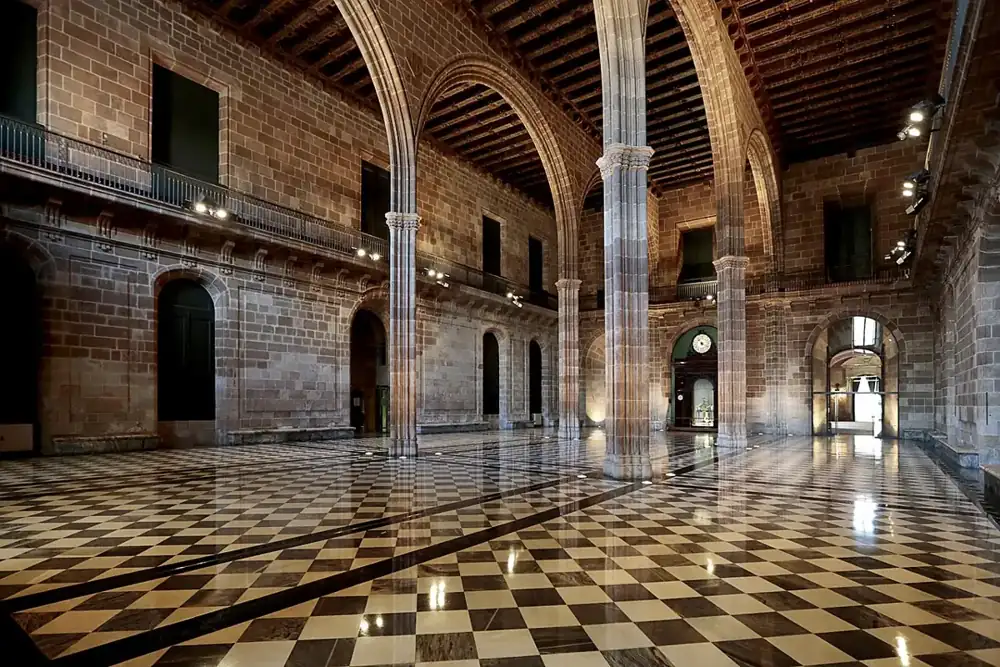
Llotja de Mar
La Ribera · maritime exchange · 14th century · limited access (check)
Google Maps · Passeig d'Isabel II
A 14th-century Gothic trading hall where maritime deals were struck, hidden inside an 18th-century neoclassical building. From the outside you'd never guess there's Gothic within.
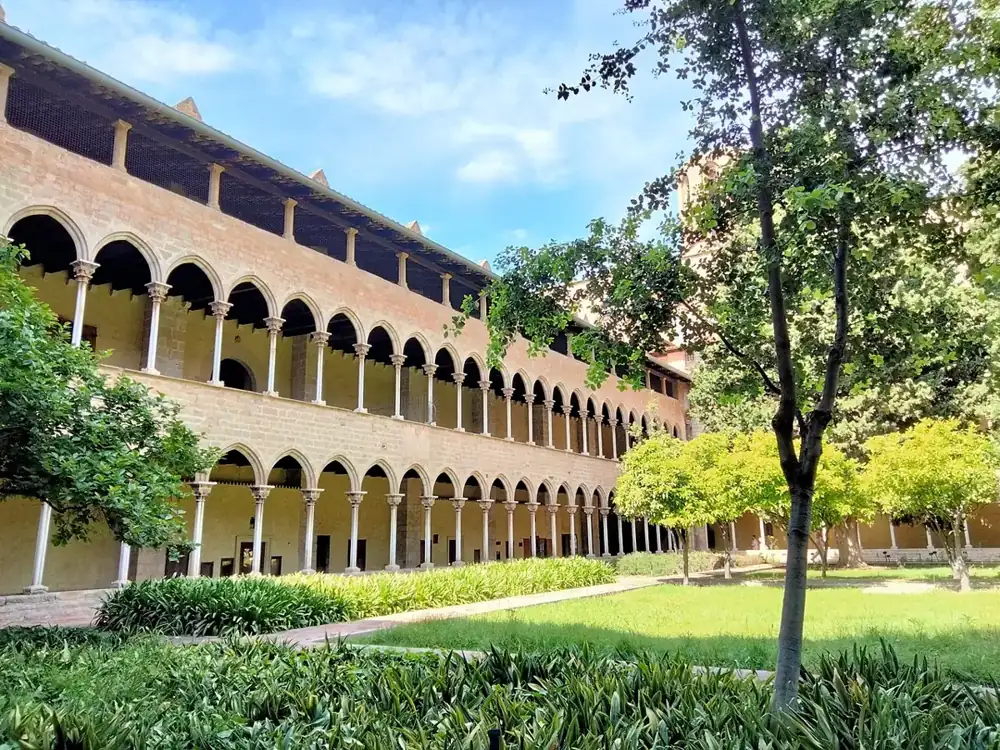
Monestir de Pedralbes
Pedralbes · Poor Clares convent · founded 1327 · about 5 € (≈$6), free on Sundays from 15:00 and on the first Sunday of the month (check)
Google Maps · website · Baixada del Monestir, 9
A Poor Clares convent from 1327 with a huge three-storey Gothic cloister. The last nuns left in 2025. It's a long way from the centre, but it makes a calm half-day trip of its own.
Carrer de Montcada
La Ribera · street of merchants' palaces · 13th–15th century · free, outdoors
Google Maps · Carrer de Montcada
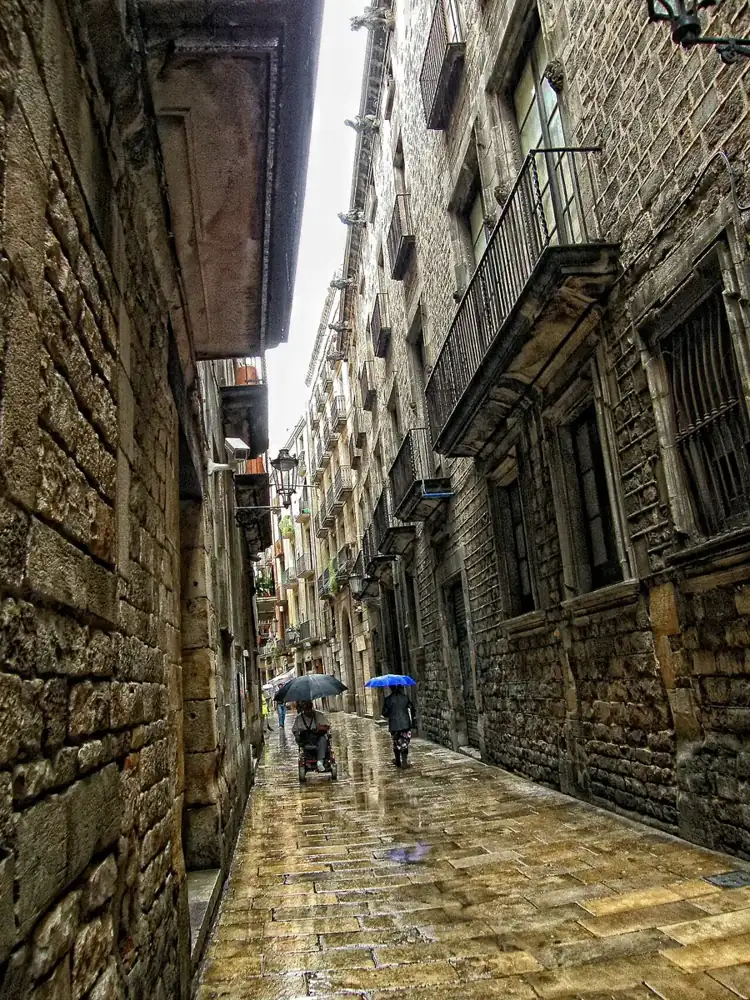
The street where medieval merchants built their palaces around inner courtyards. Several of them now house the Museu Picasso. There are also three good tapas bars here, Bar del Pla, Bodega La Puntual and Tapeo, which makes it a handy place to end a Gothic walk.
One last thing
Almost all of the old town's Gothic is within a 15-minute walk of everything else. Start at the cathedral, walk to Plaça del Rei and the Saló del Tinell, cross Plaça de Sant Jaume with the city hall and the Generalitat to Santa Maria del Pi, then cross Via Laietana to Santa Maria del Mar and Carrer de Montcada, where you can also have dinner. Save Pedralbes for a separate half-day.
More on Barcelona: Roman Barcino, Romanesque.