
Between Roman Barcino and the Gothic cathedral lie several centuries that left Barcelona very little: small Romanesque churches and chapels squeezed in between apartment blocks. Here are 7 of them, from a monastery that was already there before 911 to an archdeacon's house built into the Roman wall, with addresses, prices and what to look out for.
Prices as of 30 September 2026. Rate: 1 € ≈ $1.13. Where it says "check", the information isn't from an official site.
In short
- The oldest: Sant Pau del Camp. The monastery was already there before 911.
- Free, from outside: the apse of Sant Llàtzer by Plaça del Pedró, the Capella de Santa Llúcia from the street, and the courtyard of the Casa de l'Ardiaca (usually open).
- Quiet two minutes from the crowds: the Santa Anna cloister next to Plaça de Catalunya.
- Not always open: Sant Pere de les Puel·les is easiest to get into around mass; the Capella d'en Marcús rarely opens.
- Myth: the famous little bridge over Carrer del Bisbe isn't medieval. It's neo-Gothic, from 1928. No medieval bridges survive in the old town.
Early Middle Ages and Romanesque
Sant Pau del Camp
El Raval · monastery · founded before 911, rebuilt in the 12th century · about 6 € (≈$7) (check) · Mon–Sat, check hours
Google Maps · Carrer de Sant Pau, 101
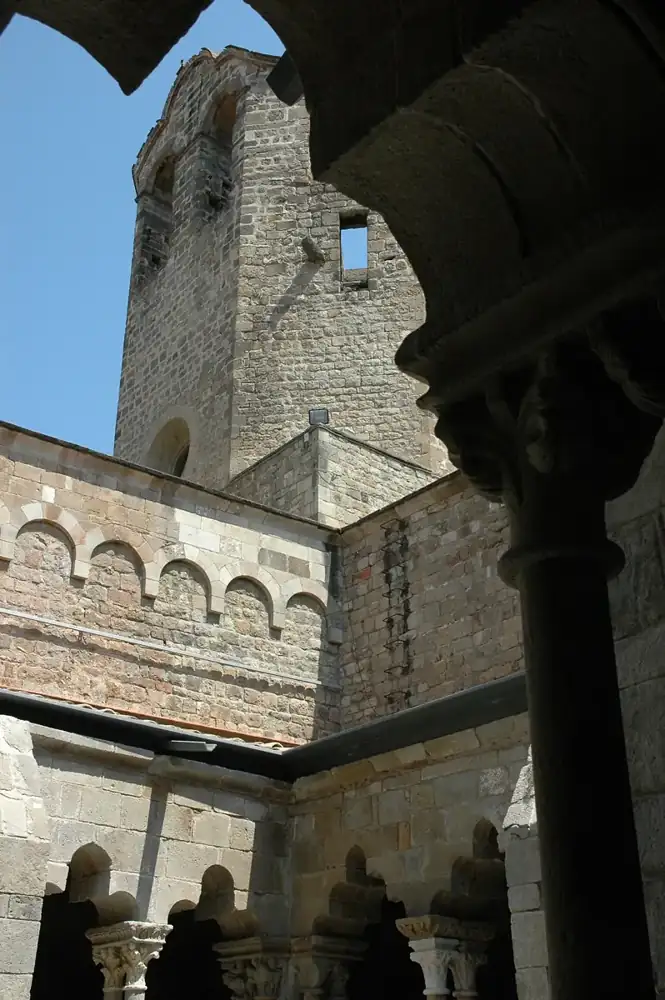
One of Barcelona's oldest churches and the city's finest Romanesque monument. The monastery already existed before 911, and the tombstone of Count Guifré II is here. Almanzor sacked it in 985, and it was rebuilt in the 12th century. The highlight is the tiny cloister with its multi-lobed arches, which feels as if it had been lifted out of a village and dropped into the middle of El Raval.
Sant Pere de les Puel·les
Sant Pere · Benedictine convent · 10th century · open during services (check)
Google Maps · Plaça de Sant Pere
A 10th-century Benedictine convent. Only the church is left, but it keeps some early Romanesque features inside. It's a working parish, so the easiest way in is around the time of Mass.
Capella d'en Marcús
Sant Pere / La Ribera · Romanesque chapel · 12th century · outside; rarely open inside (check)
Google Maps · Carrer dels Carders, 2 (Placeta d'en Marcús)
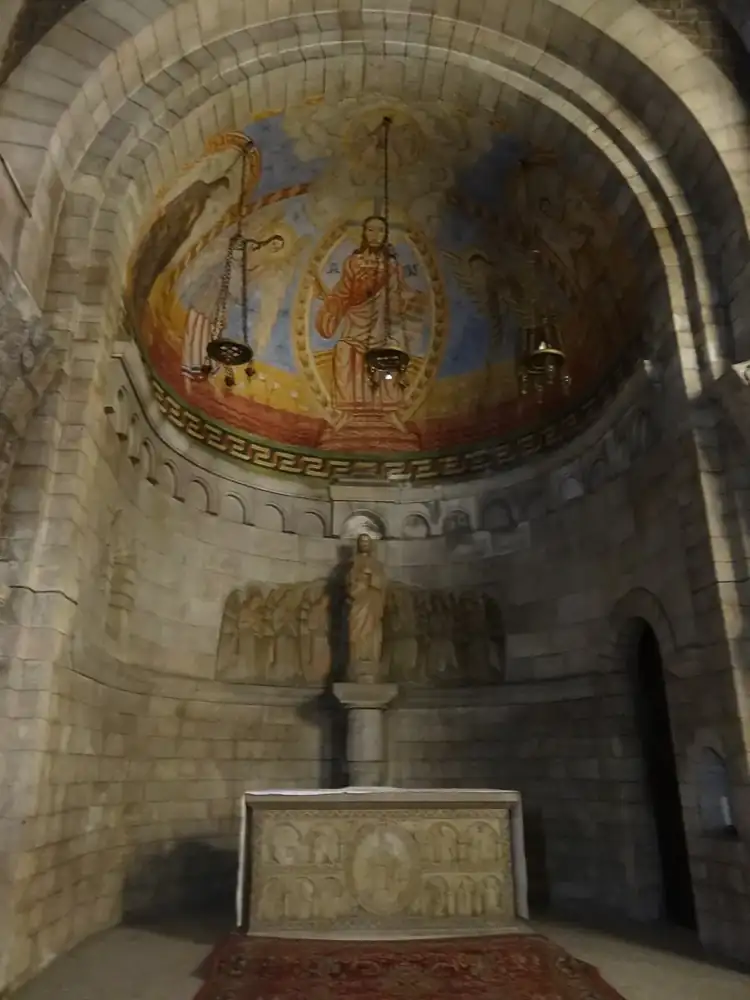
A tiny 12th-century Romanesque chapel that once belonged to a travellers' hostel on the old road out of the city. Today it's squeezed between houses on a little square. It's easy to walk past without noticing that it's older than almost everything around it.
Sant Llàtzer
El Raval · leper hospital church · late 12th century · outside, free
Google Maps · Plaça del Pedró
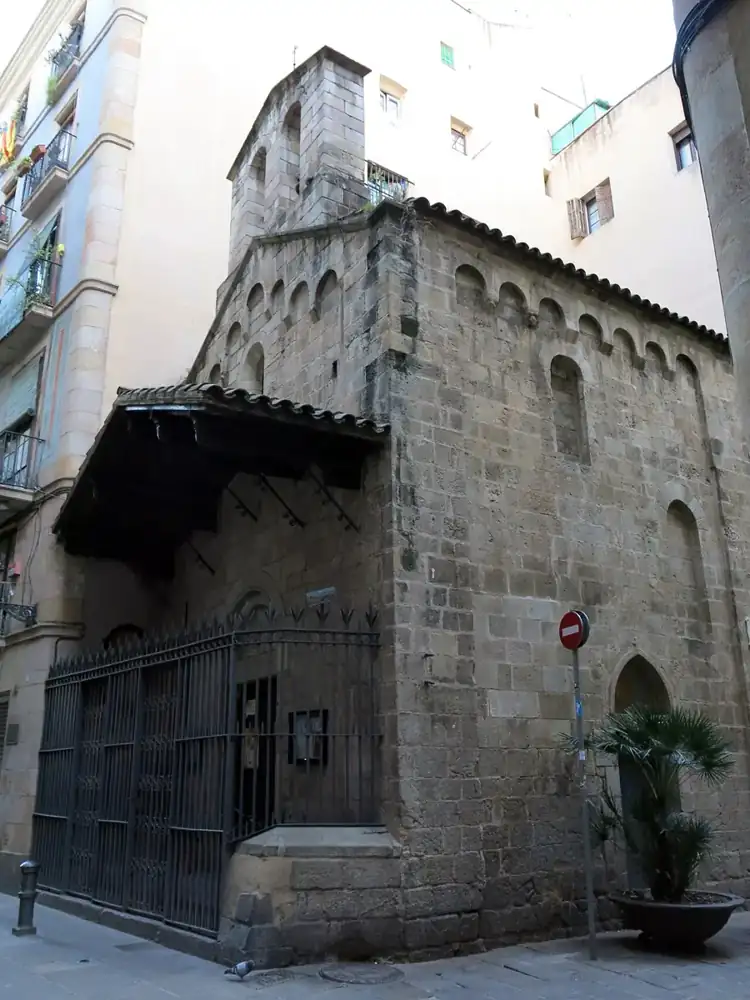
The single-nave church of a late 12th-century leper hospital, with a semicircular apse. It's hidden behind apartment blocks and can only be seen from the small garden next to Plaça del Pedró. One of the most unexpected corners of El Raval.
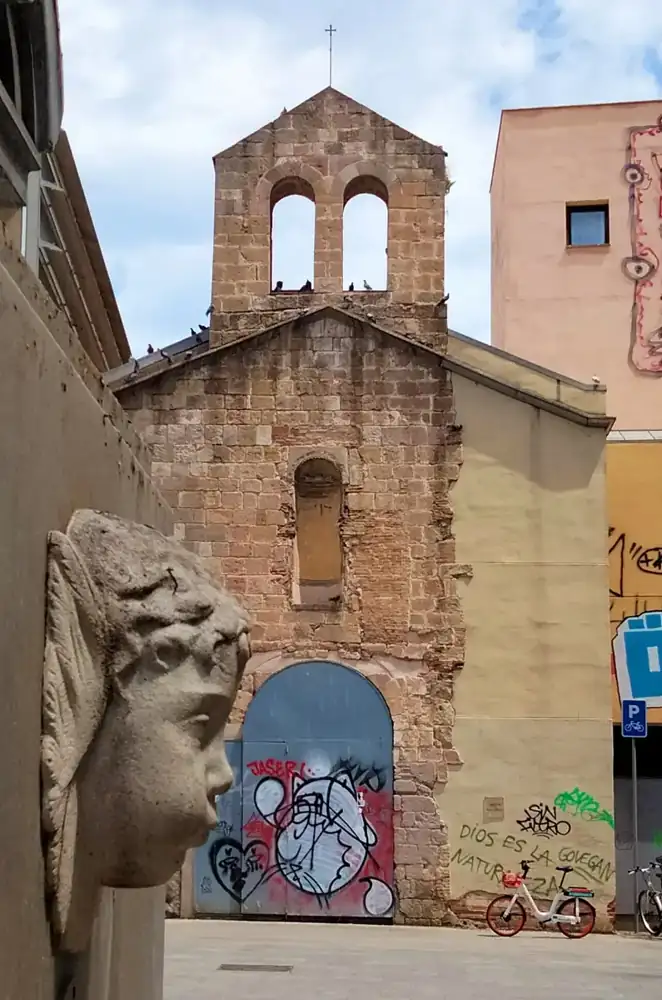
Capella de Santa Llúcia
Barri Gòtic · bishop's palace chapel · 1257–1268 · free, entrance from the street (check hours)
Google Maps · Carrer de Santa Llúcia / Carrer del Bisbe
A late Romanesque chapel built in 1257–1268 for the bishop's palace and later absorbed into the cathedral complex. Look for the tympanum with the Lamb of God, the Agnus Dei, above the bricked-up side door.
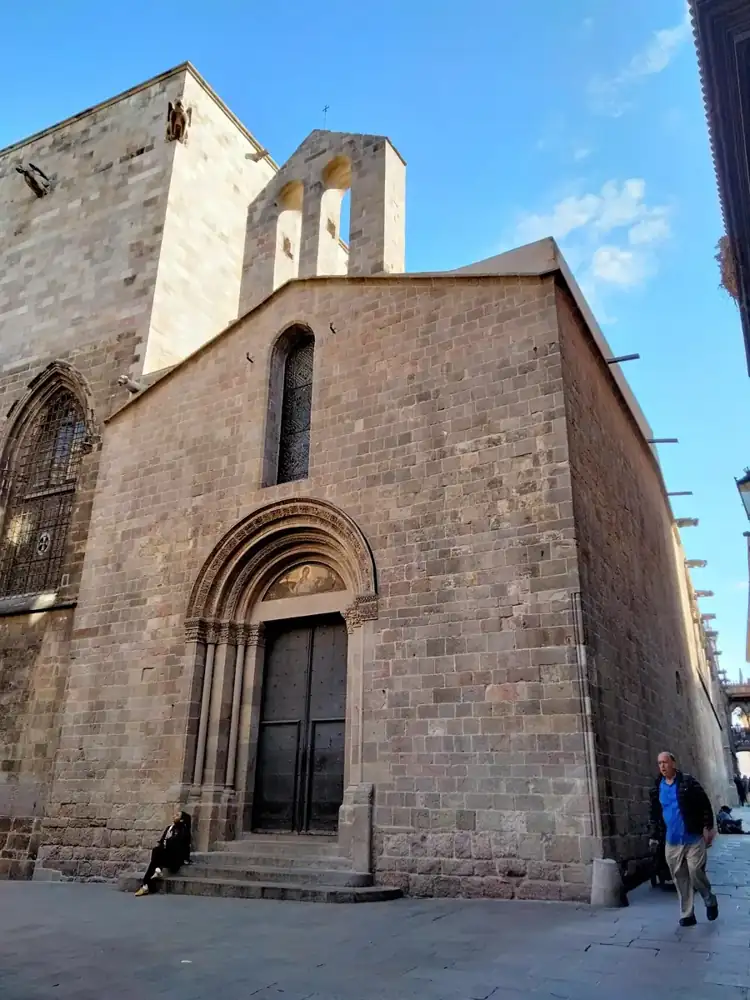
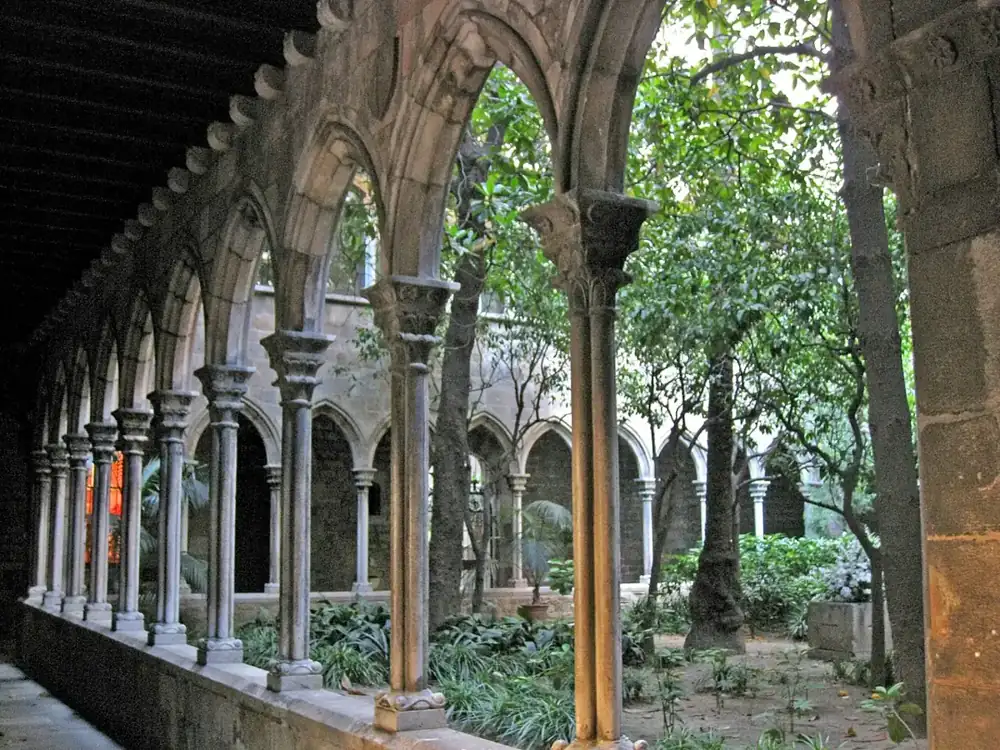
Santa Anna
Ciutat Vella, near Plaça de Catalunya · priory of the Holy Sepulchre · church from 1177, cloister 15th century · check hours and entry
Google Maps · Carrer de Santa Anna
The church of the priory of the Holy Sepulchre, begun in 1177, shows Romanesque turning into Gothic. Its real treasure is the quiet 15th-century cloister with a garden. It's two minutes from Plaça de Catalunya and the shopping streets, yet inside it's completely silent.
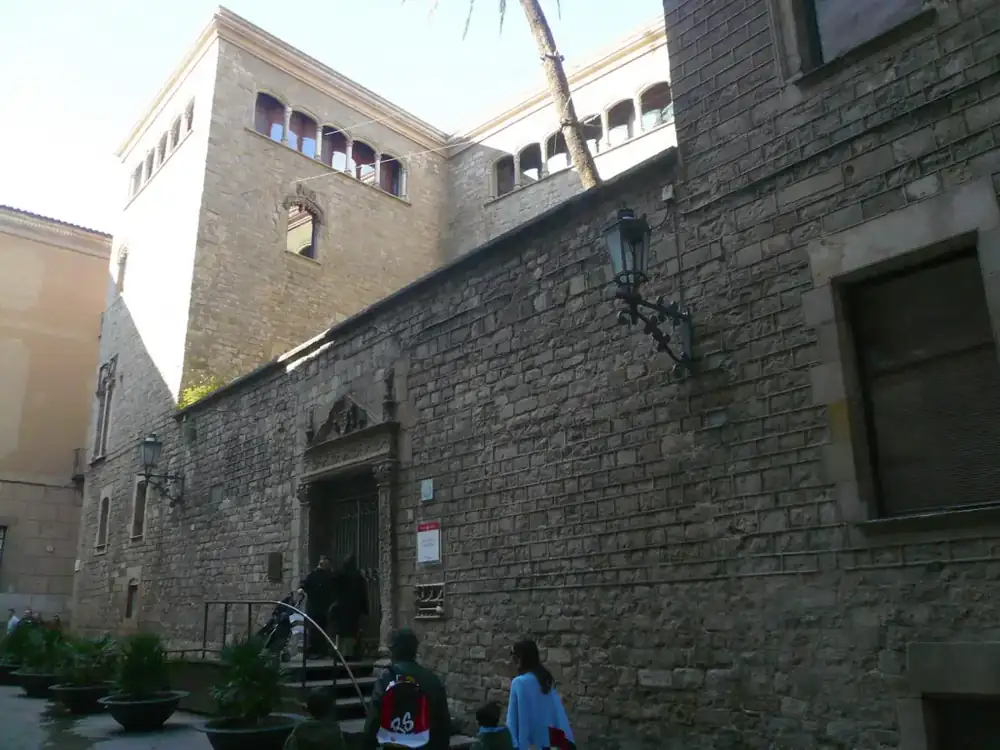
Casa de l'Ardiaca
Barri Gòtic · archdeacon's house built into the Roman wall · now the city archive · courtyard usually open, free (check)
Google Maps · Carrer de Santa Llúcia, 1
The archdeacon's house is literally built into the Roman wall and its towers, which makes it a good place to see how the medieval city put the Roman defences to use. Today the building holds the city's historical archive, and you can usually step into the courtyard.
One last thing
These places are spread across the old town, so split them into two short walks. In El Raval: Sant Pau del Camp and Sant Llàtzer. On the other side of the Rambla: Santa Anna by Plaça de Catalunya, then Santa Llúcia and the Casa de l'Ardiaca by the cathedral, and on to the Capella d'en Marcús and Sant Pere de les Puel·les. Church hours change, so check them before you set off.
More on Barcelona: Roman Barcino, Gothic.