
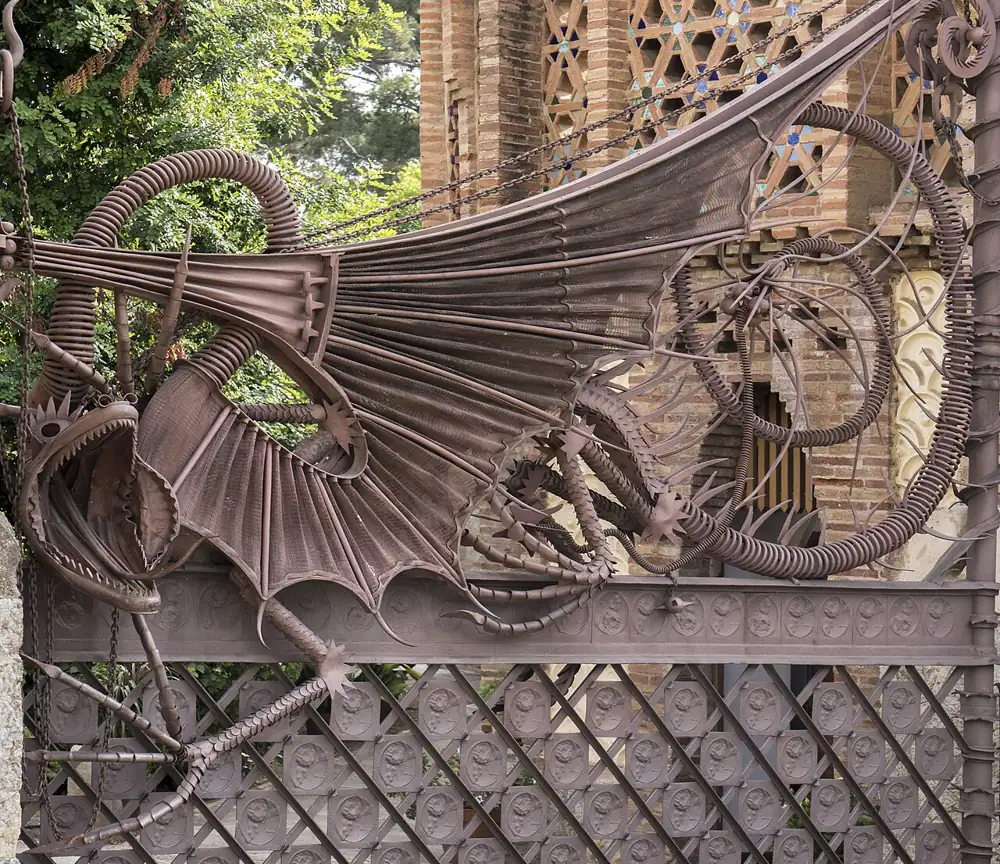
Everyone has seen Casa Batlló, La Pedrera and the Sagrada Família. But Gaudí is also a gate guarded by a dragon in Pedralbes, a severe-looking school with white arches inside, a villa on the site of a royal palace, and wine cellars above the sea. Here are 11 of his works, in the city and within an hour of it, to see Gaudí without the queues.
Prices as of 30 September 2026. Rate: 1 € ≈ $1.13. 2026 is the Gaudí Year — the centenary of his death — so special openings and hours change often. Where it says "check", confirm before you go.
In short
- Free: the dragon gate at the Pavellons Güell and the Portal Miralles, right from the street; the Nau Gaudí in Mataró is free to enter.
- The very first: the Nau Gaudí in Mataró (the first structure he actually built) and Casa Vicens (his first house).
- Most underrated: Palau Güell. It gets a fraction of the crowds of the "big three", and entry is free on the first Sunday of the month.
- Usually closed inside: the Col·legi de les Teresianes (a museum from 2028) and Casa Calvet (a private house; only the restaurant downstairs).
- Worth leaving the city for: the crypt at the Colònia Güell, 20 minutes away by train.
First and unusual works
Casa Vicens
Gràcia · his first house · 1883–1885 · about 21 € (≈$24) (check)
Google Maps · website · Carrer de les Carolines, 20–26
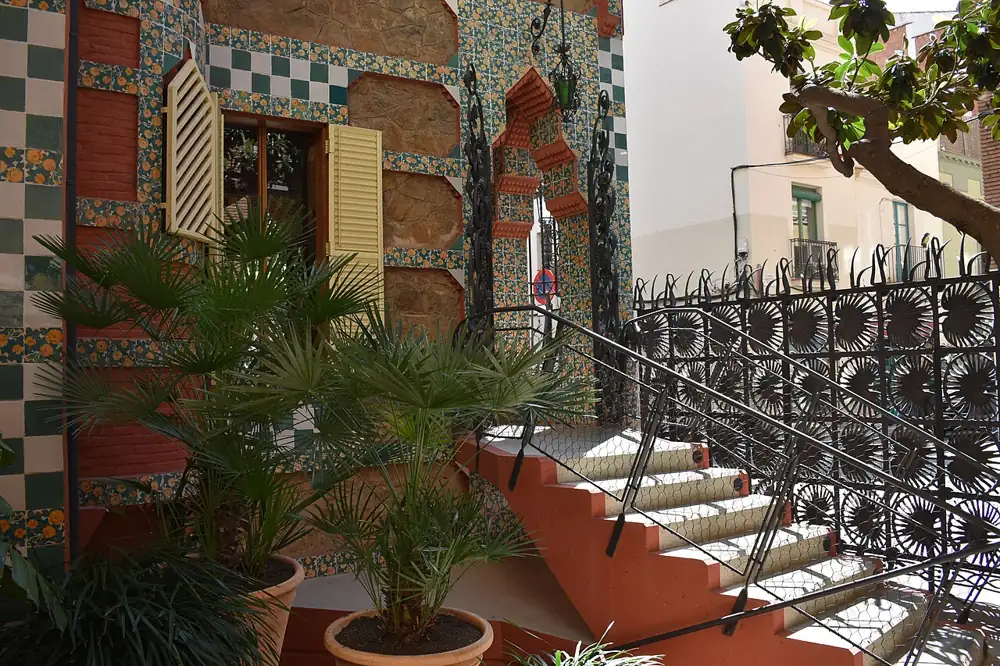
The first house Gaudí built: bright, Moorish in spirit, covered in tiles, with a smoking room. The famous flowing lines aren't there yet, but you can see where it all began.
Pavellons de la Finca Güell
Pedralbes · gatehouse and stables of the Güell estate · 1884–1887 · Sat–Sun 10:00–16:00, about 4 € (≈$4.50) / 2.50 € reduced (check)
Google Maps · Avinguda de Pedralbes, 7
The Mudéjar-style gatehouse and stables on the estate of Gaudí's chief patron, Eusebi Güell. The star is the wrought-iron gate with a huge dragon, one of the most striking details in all of Gaudí, and you can admire it straight from the street.
Palau Güell
El Raval · Güell's town palace · 1886–1890 · 15 € (≈$17), reduced 12 €, children 5 €; free on the first Sunday of the month; closed Mondays
Google Maps · website · Carrer Nou de la Rambla, 3–5
Güell's town palace, a few steps from the Rambla: a hall beneath a parabolic dome, stables in the basement and a roof covered in a forest of trencadís chimneys. It gets a fraction of the visitors of the "big three".
Col·legi de les Teresianes
Sant Gervasi – Tres Torres · school of a religious order · 1888–1890 · usually closed; museum from early 2028
Google Maps · Carrer de Ganduxer, 85–105
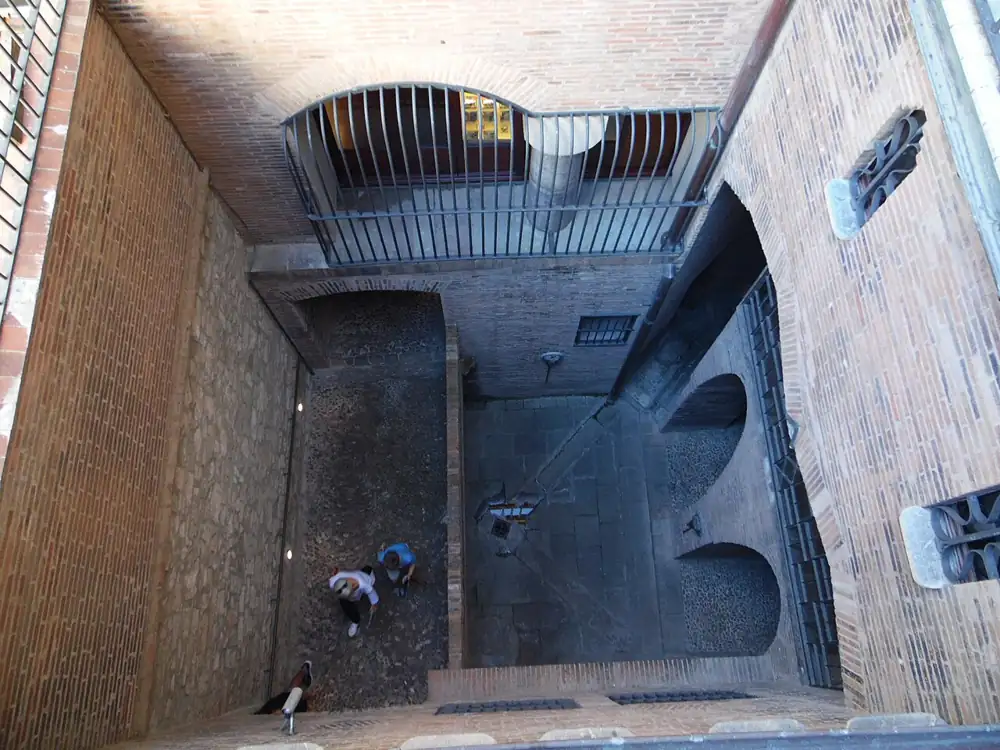
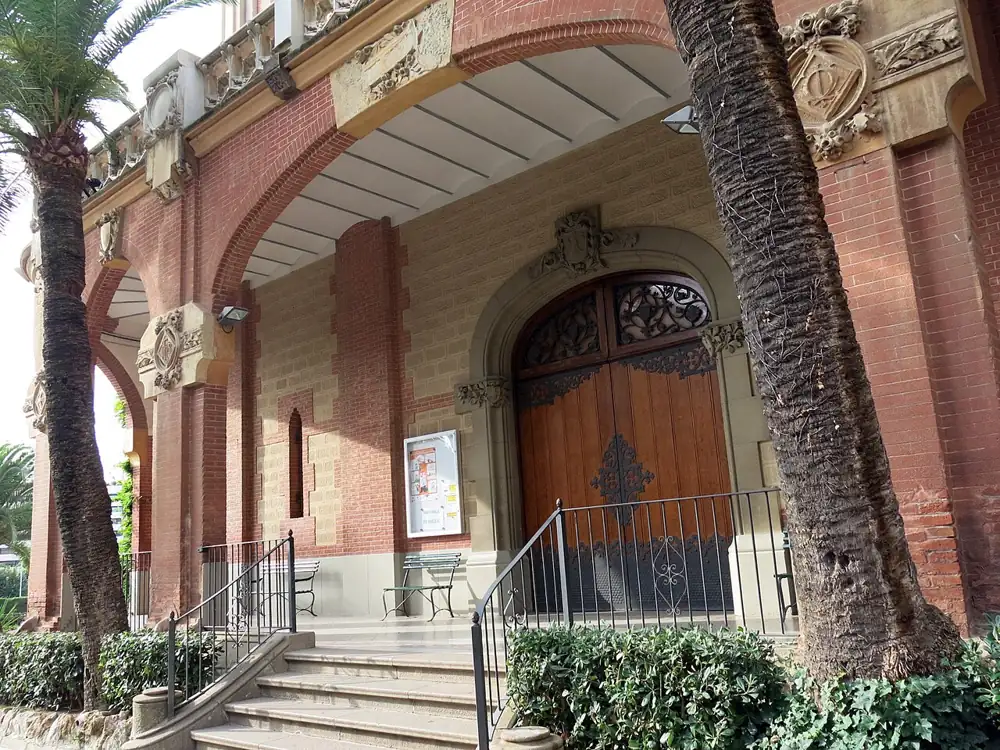
One of Gaudí's least typical buildings: austere brick on the outside, corridors of whitewashed parabolic arches within. It's still a working school, so you usually can't get in, but the Museu Gaudí Teresianes is due to open here in 2028.
Casa Calvet
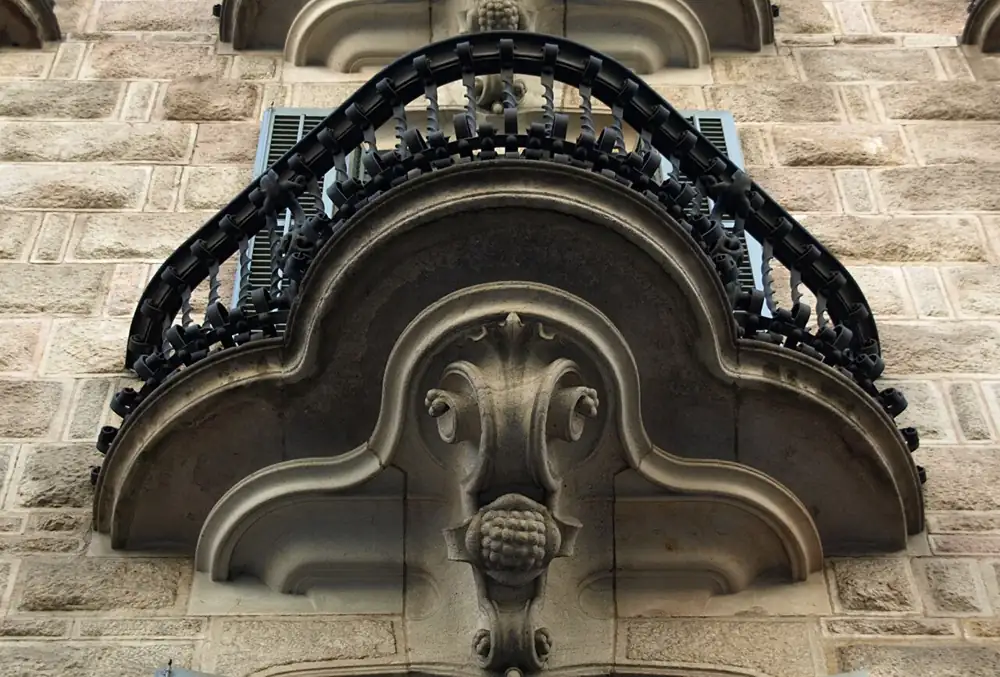
Eixample · his most "ordinary" building · 1898–1900 · private building; restaurant on the ground floor (check)
Google Maps · Carrer de Casp, 48
Gaudí's most restrained building, and yet the city named it the best building of 1900. It's a private house, so the only way to see the ground-floor interior is to have dinner in the restaurant downstairs.
Torre Bellesguard
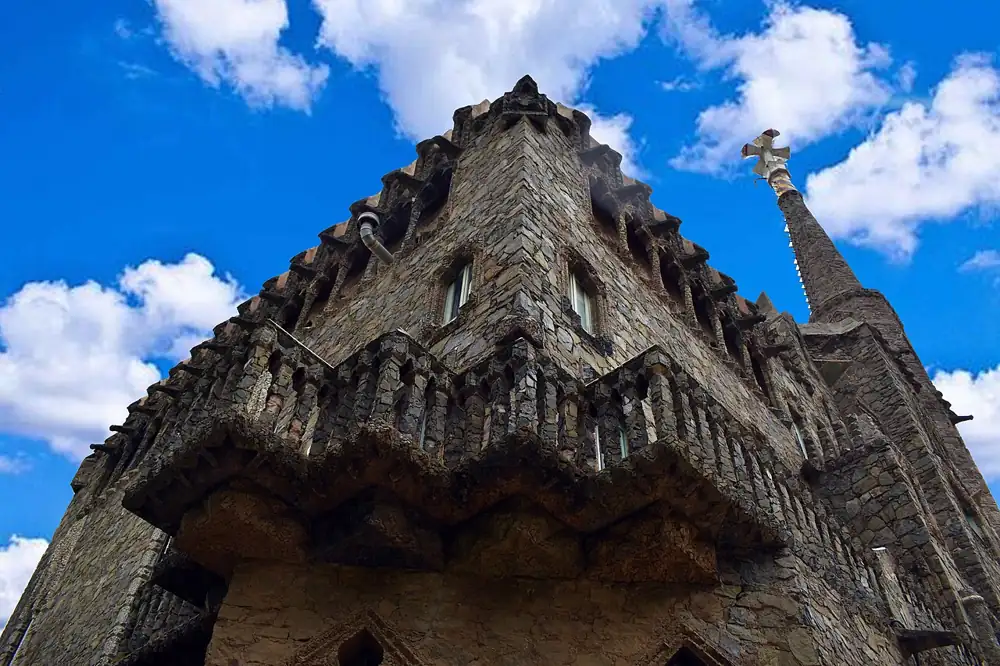
Sant Gervasi · villa · 1900–1909 · Tue–Sun 10:00–15:00, about 9 € (≈$10) with audio guide
Google Maps · website · Carrer de Bellesguard, 16–20
A neo-Gothic villa on the site of King Martí I's medieval palace, with a view over the whole city and a trencadís dragon on the roof. It's still a private family home, but it's open to visitors.
Portal Miralles
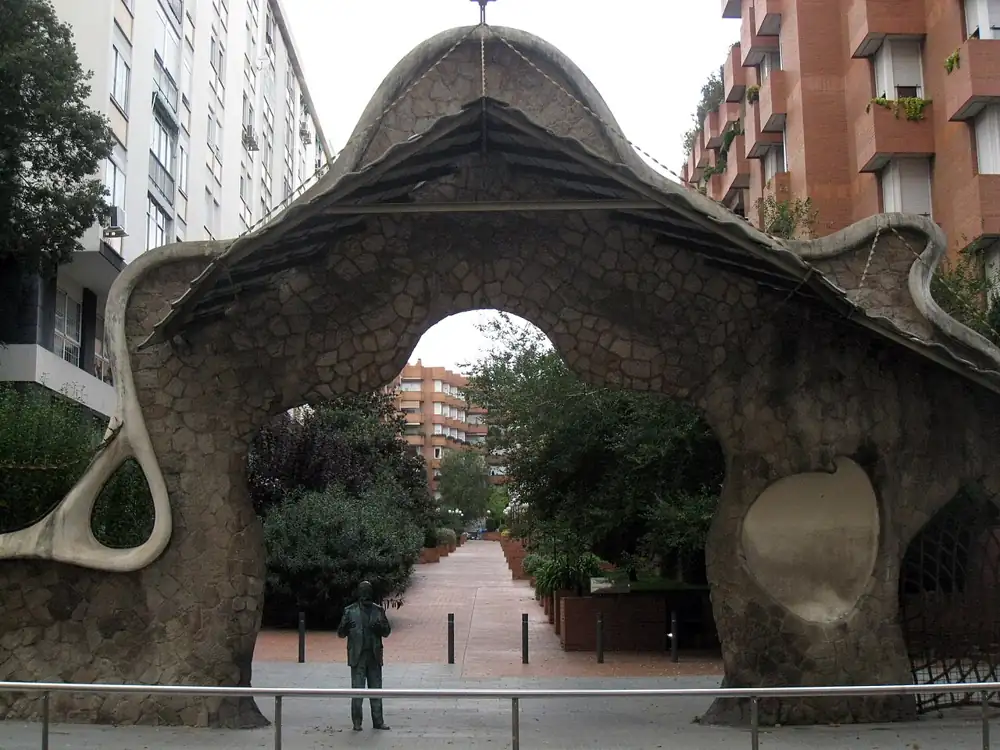
Sarrià / Les Corts · estate gate and wall · 1901–1902 · outside, free
Google Maps · Passeig de Manuel Girona, 55–61
All that's left of the estate is a wavy wall and a gate with a canopy that looks like a seashell. Next to it stands a statue of Gaudí himself: a rare chance to take a photo with him beside his own work.
Worth a trip out of town
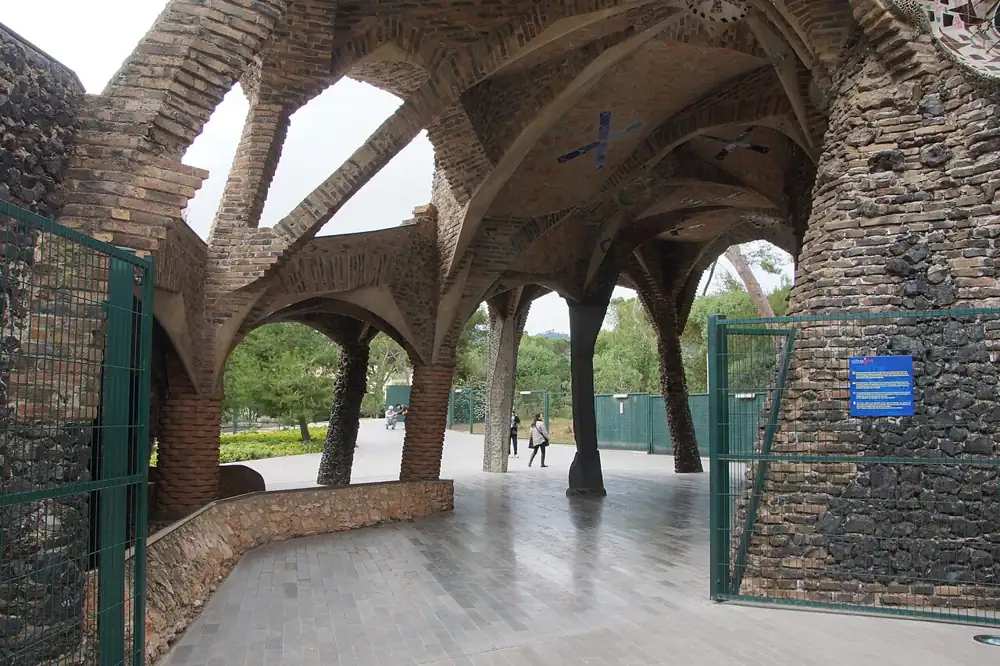
Cripta Gaudí, Colònia Güell
Santa Coloma de Cervelló · crypt of the church for a workers' village · 1908–1914 · 10 € (≈$11), reduced 8 € · FGC train, about 20 minutes
Google Maps · website · Colònia Güell, Santa Coloma de Cervelló
The only finished part of the church Gaudí designed for Güell's workers' village, and a UNESCO World Heritage site. This is where he tested his hanging chain model. The leaning columns of basalt and brick make the building look as if it's growing out of the ground.
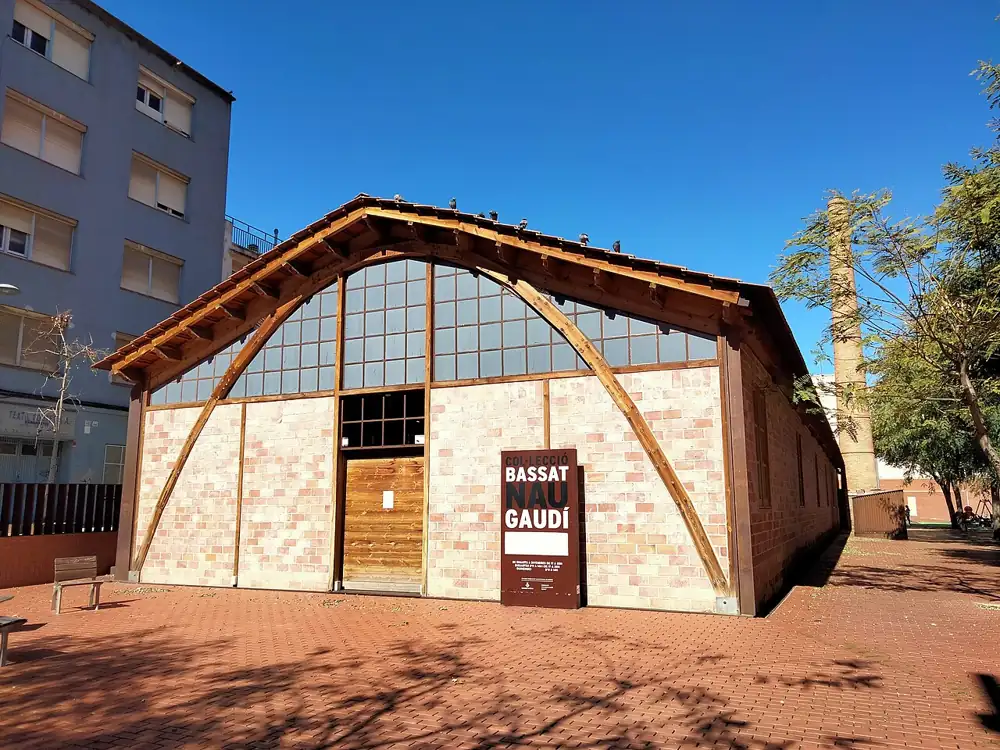
Nau Gaudí
Mataró · workers' cooperative workshop · 1878–1883 · free; Tue–Fri 17:00–20:00, Sat 11:00–14:00 and 17:00–20:00, Sun 11:00–14:00 (check)
Google Maps · website · Carrer de la Cooperativa, 47, Mataró
The very first structure Gaudí ever built: the bleaching shed of a workers' cooperative, with parabolic arches of laminated timber. Today it houses the Col·lecció Bassat of contemporary art, and entry is free.
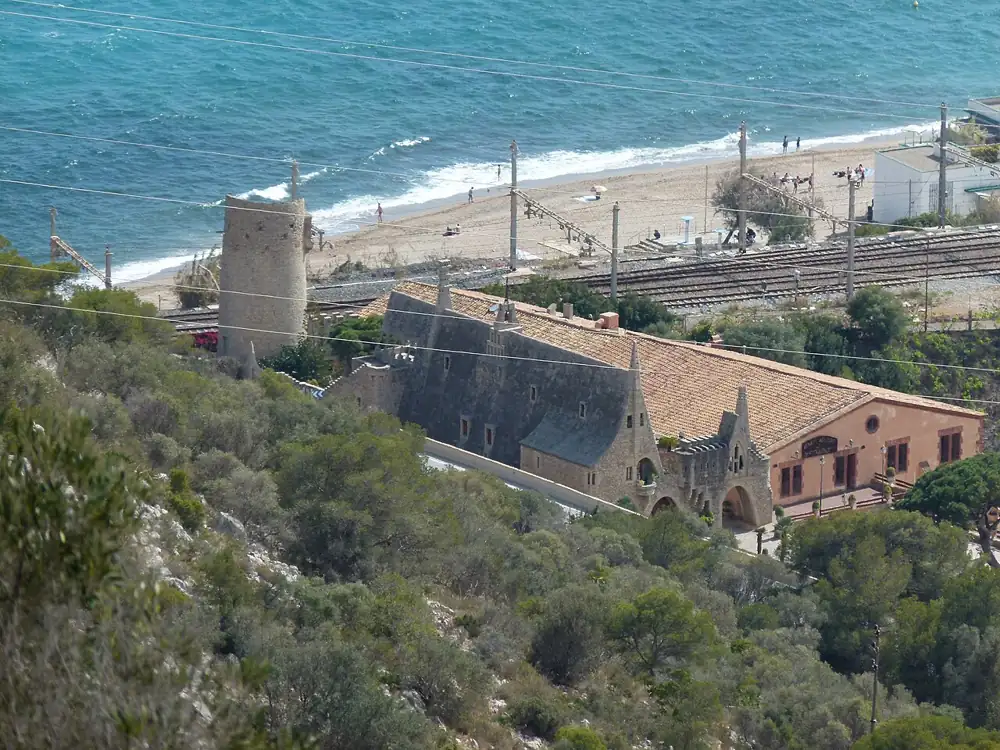
Celler Güell
Garraf (Sitges) · wine cellars · 1895–1901 · restaurant (check)
Google Maps · by the C-31 coast road, Garraf
Güell's wine cellars above the sea, with a steep, tent-like stone roof. The attribution is disputed: credit is shared between Gaudí and his assistant Francesc Berenguer. Today it's a restaurant.
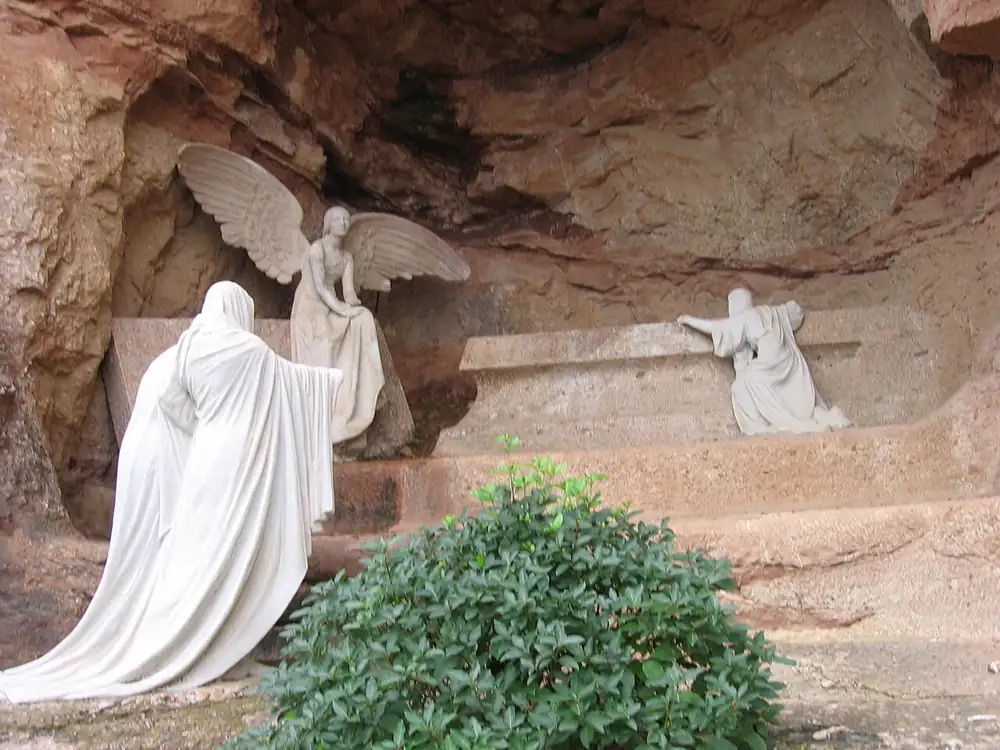
Primer Misteri de Glòria on Montserrat
Montserrat · sculptural group of the Resurrection · 1903–1916 · the path is free; check its condition after restoration
Google Maps · path to the Santa Cova, Montserrat
A sculptural group of the Resurrection set right into the rock beside the path to the Santa Cova. The design is Gaudí's; the sculptures are by Llimona and others. A good reason to walk the path if you're heading up Montserrat.
Also worth a mention: Reus, where Gaudí was born, has an interpretation centre, the Gaudí Centre (there are no Gaudí buildings in the town); the Jardins Artigas gardens in La Pobla de Lillet are about two hours from Barcelona; and the MNAC on Montjuïc holds his furniture from Casa Batlló and Casa Calvet.
One last thing
The upper city — Casa Vicens, the Pavellons Güell, Portal Miralles, the Teresianes and Bellesguard — is best linked up by metro and bus. Palau Güell and Casa Calvet are in the centre and easy to add to any walk. And check the dates: in the Gaudí Year, some places open only on special days.
More on Barcelona: where Gaudí lived and died.