
Gaudí spent his whole life in Barcelona, and the city keeps not only his buildings but his biography: the university where he got his diploma, the lamp posts he made as a student, the flats he lived in, the church he went to every day, and the spot where a tram knocked him down. Here are 9 places to follow his path, from his first commission to his grave in the crypt of the Sagrada Família.
Prices as of 30 September 2026. Rate: 1 € ≈ $1.13. 2026 is the Gaudí Year — the centenary of his death — so special openings and hours change often. Where it says "check", confirm before you go.
In short
- The very first: the lamp posts on Plaça Reial, his first commission from the city, made while he was still a student.
- Free and right on the street: the Plaça Reial lamp posts, the Cascada in Parc de la Ciutadella, the university courtyards and the plaque on the Gran Via.
- Where he lived: flats on Consell de Cent and Diputació, then almost 20 years in a house in Park Güell (now the Casa Museu Gaudí).
- His last journey: Sant Felip Neri → the plaque at Gran Via, 665, where the tram hit him → the Antic Hospital de la Santa Creu, where he died → the crypt of the Sagrada Família, where he is buried.
Student years and first commissions
Edifici Històric de la Universitat de Barcelona
Eixample · where he studied · qualified as an architect in 1878 · courtyards and gardens free
Google Maps · Gran Via de les Corts Catalanes, 585
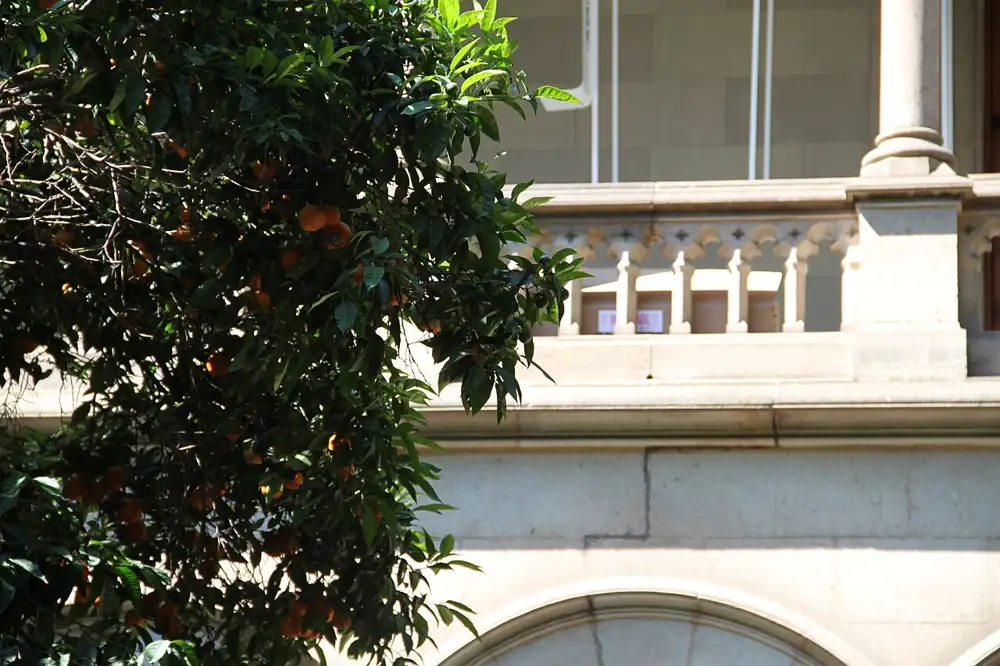
This was home to the school of architecture Gaudí graduated from in 1878. His graduation is linked to the director's famous line: either they had just given a diploma to a genius or to a madman. Sources disagree on whether he studied in this building for his whole course, but you can walk into the courtyards and gardens freely.
The lamp posts on Plaça Reial
Barri Gòtic · his first commission from the city · 1878–1879 · on the square, free
Google Maps · Plaça Reial (plus a pair on Pla de Palau)
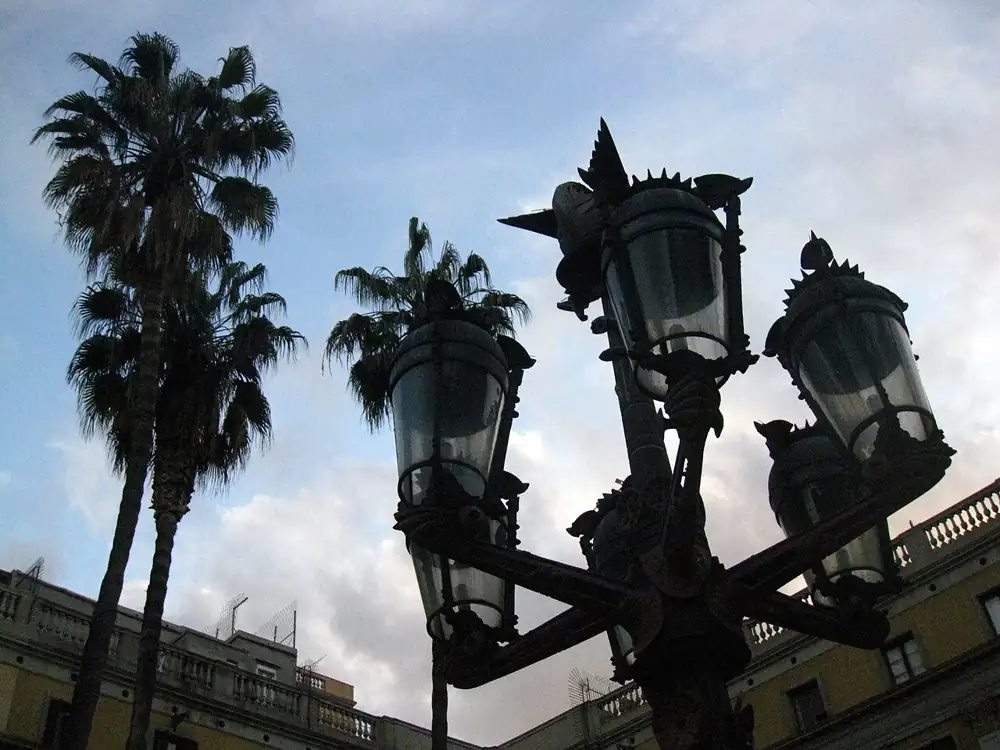
Gaudí's first work for the city, made while he was still a student: many-armed cast-iron lamp posts topped with the winged helmet of Mercury. Thousands of tourists walk past them every day, and hardly anyone knows who designed them.
The Cascada in Parc de la Ciutadella
Ciutat Vella · student work · 1875–1881 · in the park, free
Google Maps · Parc de la Ciutadella
A monumental cascade fountain designed by Josep Fontserè. Gaudí, then a student, worked on it alongside the master, reportedly on the hydraulics and some of the decoration. A good excuse to take a closer look at the fountain.
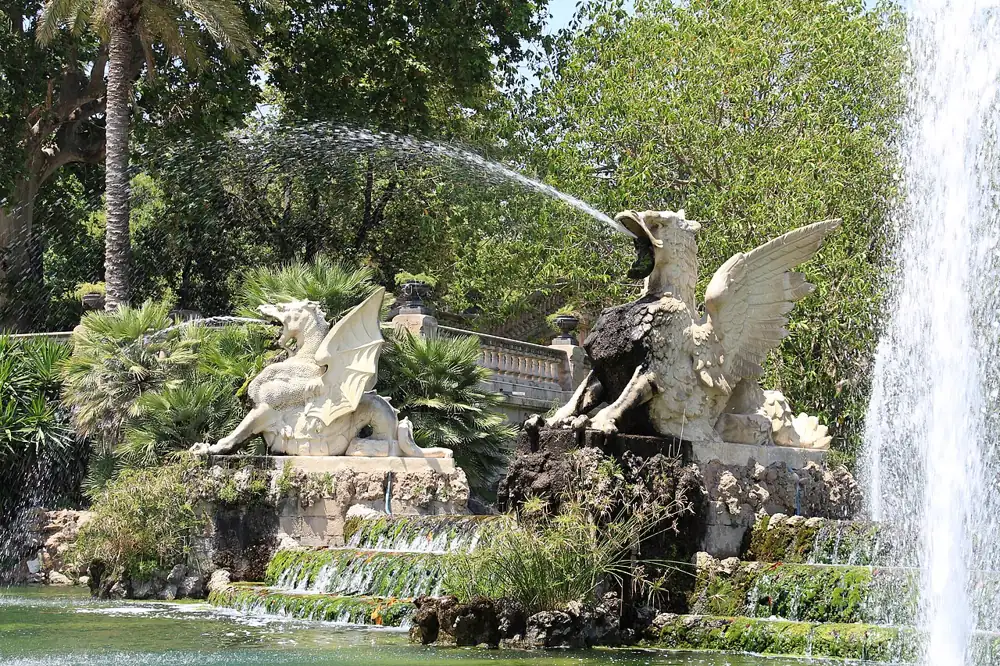
Where he lived
The Gaudí family flats in the Eixample
Eixample · where he lived · c. 1876–1906 · nothing to visit, just pins for your map
Google Maps · Carrer del Consell de Cent, 338 and Carrer de la Diputació, 273
For almost 30 years Gaudí lived in ordinary Eixample flats with his father and his niece: from about 1876 to 1889 on the fourth floor of Carrer del Consell de Cent, 338, then until 1906 at Carrer de la Diputació, 273. The buildings themselves are unremarkable, but it's fun to walk past and picture him setting off from here to his building sites every day.
Casa Museu Gaudí
Gràcia, Park Güell · where he lived · 1906–1925 · separate ticket, not included in the park's Monumental Zone (check the price)
Google Maps · website · Park Güell, Carrer d'Olot
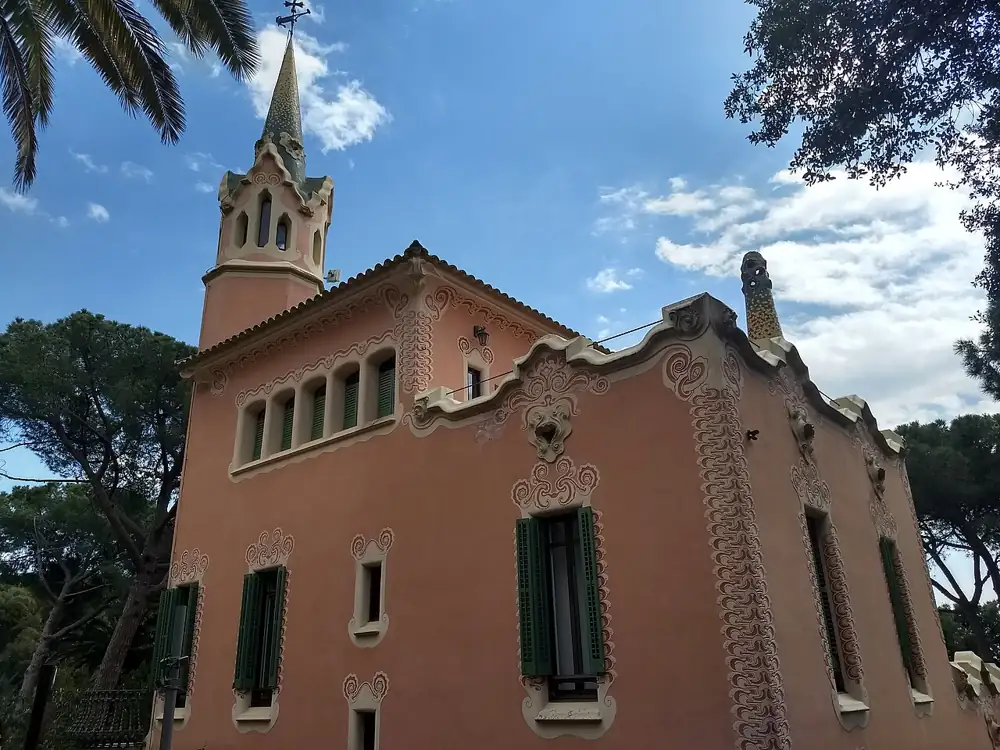
The pink house with a little tower in Park Güell, where Gaudí lived for almost twenty years. Curiously, he didn't build it himself: it was designed by his assistant Francesc Berenguer. Inside are his bedroom and furniture he designed for Casa Batlló, Casa Milà, Casa Calvet and Casa Vicens.
His last journey
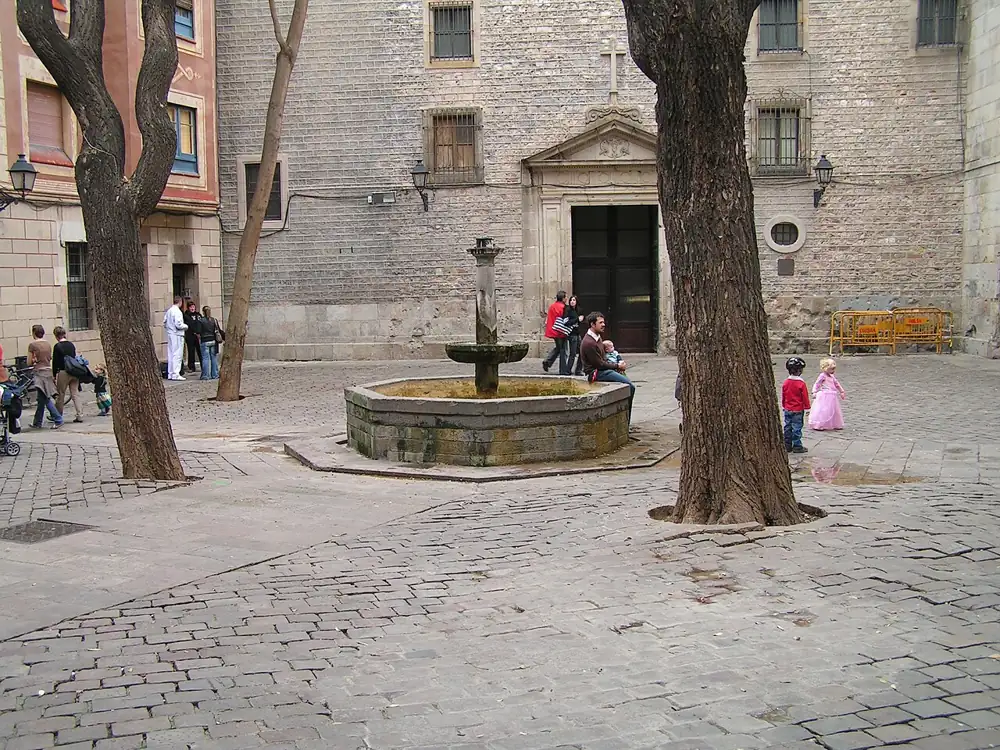
Església de Sant Felip Neri
Barri Gòtic · his church · his later years · open during services (check)
Google Maps · Plaça de Sant Felip Neri
In his last years Gaudí came here every day, and this is where he was heading when the tram hit him. The square is one of the quietest in the Barri Gòtic, and the church walls are still pitted with shrapnel marks from the Civil War.
The memorial plaque where he was hit
Eixample · where the tram knocked him down · 7 June 1926 · in the pavement, free
Google Maps · Gran Via de les Corts Catalanes, 665 (central walkway, between Carrer de Bailèn and Carrer de Girona)
On 7 June 1926 Gaudí was hit here by a number 30 tram. Exactly a hundred years later, on 7 June 2026, a round memorial plaque was unveiled on the spot. It's easy to miss: look for it in the central pedestrian strip of the Gran Via.
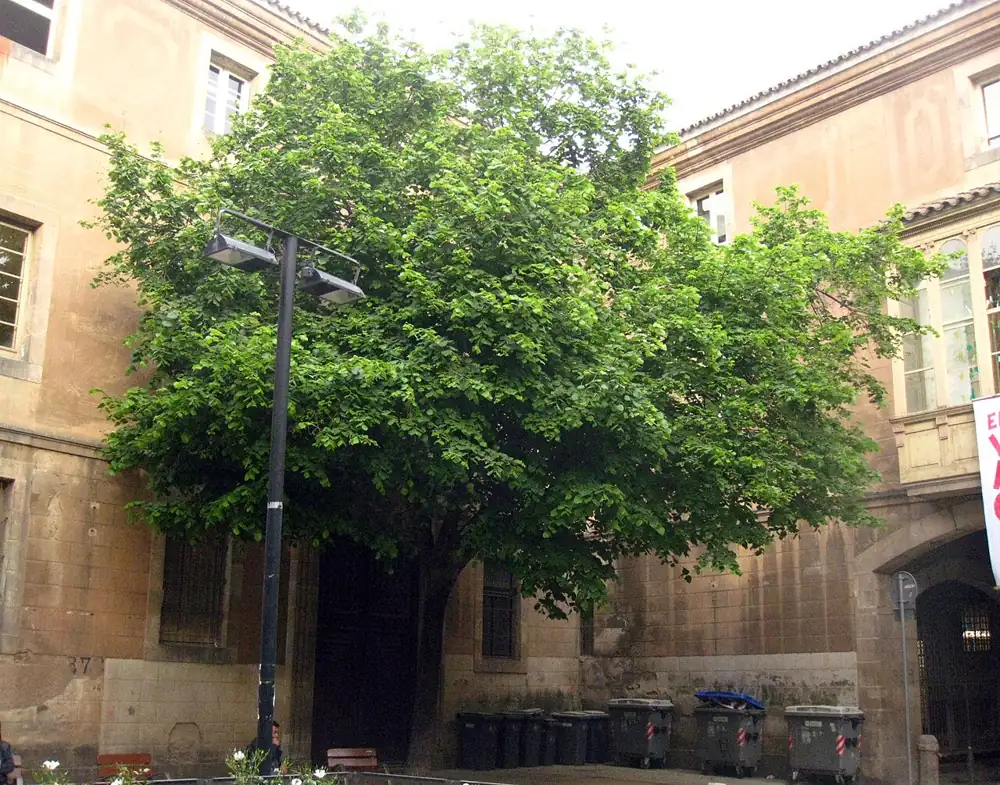
Antic Hospital de la Santa Creu
El Raval · where he died · 10 June 1926 · courtyard free
Google Maps · Carrer de l'Hospital, 56
Gaudí dressed so plainly that after the accident he was taken for a pauper and brought to this hospital for the poor. He died here on 10 June 1926. The hospital is a 15th-century Gothic complex that now houses the Biblioteca de Catalunya, and you can wander into its quiet garden courtyard for free.
The crypt of the Sagrada Família
Eixample · where he is buried · crypt from the 1880s · the tomb is visible through an opening in the basilica floor or during Mass in the crypt (check)
Google Maps · Carrer de Mallorca, 401
Gaudí is buried in the chapel of Our Lady of Mount Carmel in the crypt, which, as it happens, he built himself. In the last months of his life he even slept in his workshop on the building site. You can see the tomb from above, through an opening in the basilica floor.
One last thing
The centre makes a half-day walk: Plaça Reial → Antic Hospital de la Santa Creu → Sant Felip Neri → Parc de la Ciutadella. The university, the flats and the Gran Via plaque fit well with a visit to the Sagrada Família, and the Casa Museu Gaudí with Park Güell, though the house needs its own ticket. And check the dates: in the Gaudí Year, some places open only on special days.
More on Barcelona: lesser-known Gaudí.